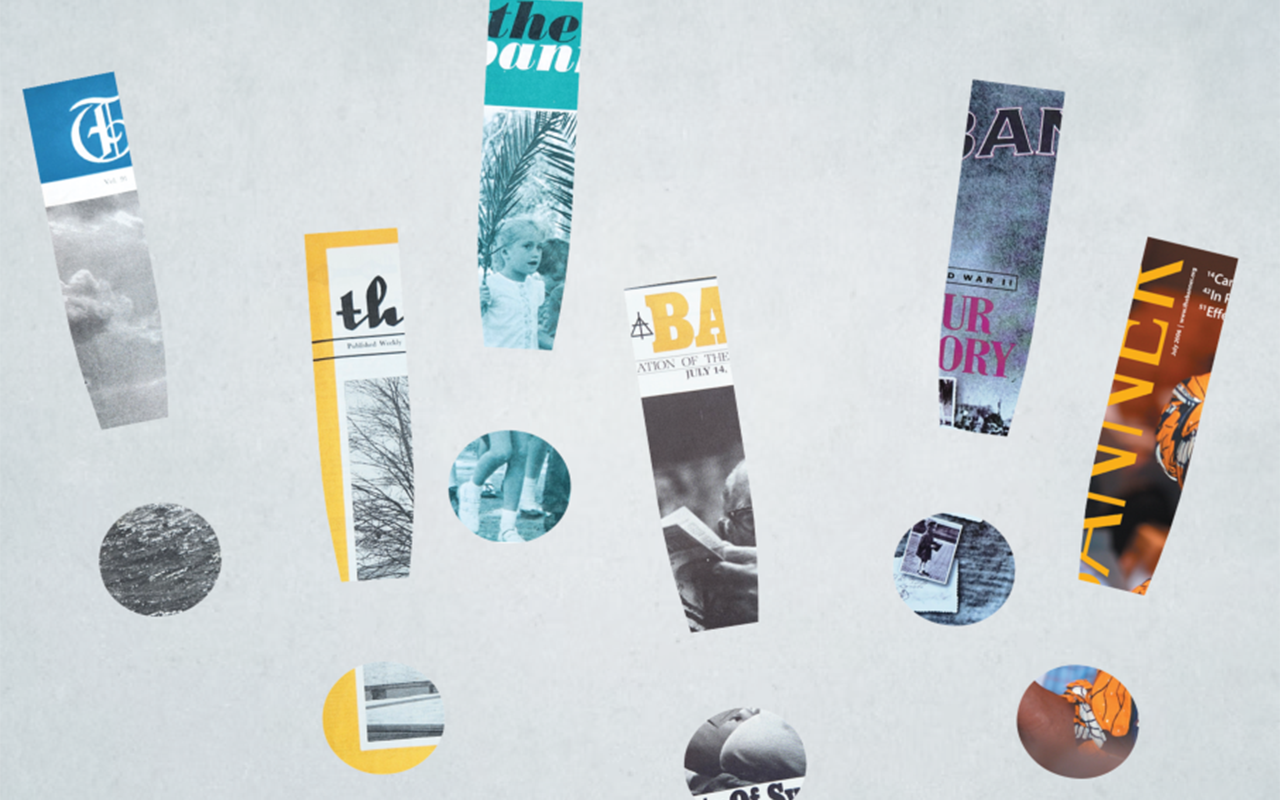
When Synod 2025 met in June, one of its most-discussed decisions was a change in the editorial policy of The Banner. While many readers were shocked, even appalled, at the change, tussles over the balance between confessional boundaries and editorial freedom are not new. Last year’s decision is just the latest in a 160-year-long discussion of the role of The Banner (formerly called The Banner of Truth).
In 1884, synod showed the continual difficulty in finding the right balance. Synod 1884 warned that De Wachter, the Dutch-language predecessor of The Banner, “may not … weaken the ecclesiastical and religious unity of our people. Synod reminds the writers to be moderate in their expressions.”
Already back in 1922, synod declared, “(Our periodicals) must delineate the boundaries properly, even though this in spite of all caution, can easily be the cause of friction.” Then in 1934, synod noted that the articles that contain constructive criticism should not be refused merely because of their critical content, but editors should refuse articles that ‘imperil the purity of the church in doctrine or life.’”
Synod 1941 expressed the desire to allow the greatest possible freedom of expression to writers but stressed “the denominational character, scope, and purpose of our official church papers.”
The mandate adopted in 1976 most closely resembles what exists today: that the purpose of The Banner is to inform our membership of what is happening in the denomination; provide meaningful devotional materials written to build and encourage our Christian families; and include editorials, studies, and articles to guide and challenge our members, all in the light of our Reformed faith.
Synod continued: “The goal of (the church’s) weekly periodical is that the will and work of God, as defined by the Scriptures and by our confessions, shall be promoted in church and world. …The editor shall exercise care in communicating our Reformed heritage and … at the same time acquaint the membership with new insights into the meaning of Scripture and with the ongoing development of thought and life in the Christian world. The editor shall recognize and respect diversity within the CRC, while striving for such unity as will build up the church.” To that end, “The editor shall be accorded a wide range of editorial freedom while being obliged to fulfill the purposes for which The Banner is published.”
In 1984, some readers were irritated that news was reported without editorial comment. The denomination’s Board of Publication (which supervised The Banner) responded that telling readers what a “real Christian Reformed person” must think would treat readers as children.
The Board of Publication noted that the editor should always defend the Reformed confessions but should not always defend Christian Reformed practices and traditions, nor does the editor need to defend every position taken by CRC synods.
Testing
The Banner’s editorial freedom was tested in 1998 when the IRM Corporation defaulted on its payments to investors, among them members and ministry agencies of the CRC. The CRC’s Board of Trustees prohibited The Banner from investigating the situation, on the advice of legal counsel. The Banner staff believed that this decision “is in conflict with synodically approved guidelines covering The Banner's accountability and freedom.” Delegates to Synod 1998 affirmed guidelines first proposed in 1993: that the editorial staff must be granted the freedom to encourage “a responsible discussion of the issues important to the life of the church, through editorial comment and articles that represent the various views held within the church,... and permit people of the church to voice their views and reactions.” At the same time the guidelines stated that The Banner was called to be faithful to Scripture and the confessions, … and nothing deliberately inflammatory, insulting, or divisive should be published.”
The editorial freedom of The Banner was again tested when the magazine ran two controversial articles in 2013 (June 2013: “Tomorrow’s Theology,” and July 2013: “Where Do We Draw the Line?”). Synod 2014 received several overtures objecting to the inclusion of the articles. That synod declared its lament that the articles were published, the editor apologized, and Synod 2014 called for a review of The Banner’s mandate.
The committee that reviewed the mandate told Synod 2015 that the 1998 mandate was “fundamentally sufficient” and the concerns raised in 2014 were brought about “by an error in judgment on the part of the editor.” Synod added wording to the mandate’s introduction, noting that stimulating critical thinking about issues must be done “in a way that encourages biblical thinking … in line with our confessional heritage.”
Synod 2015 also took note that since the last review of the mandate, The Banner was now operating in an online world and that potential editors need to consider how that affects the style, ethos, and content of the magazine.
Present Day
Fast forward 10 years, and The Banner’s mandate was again under discussion. Synod 2025 received complaints that The Banner was publishing articles that were out of line with the CRC’s confessional heritage. Synod recognized that in the online world, articles could be found out of context with other parts of the magazine, causing confusion about the CRC’s theological positions.
As a result, Synod 2025 mandated that the magazine present to readers issues pertinent to the church, but rather than allowing inclusion of “diverse positions within the church,” it would present “the position held by the church.” The Banner retains the freedom to “stimulate critical thinking” but has to locate that “in the larger convictions of the denomination.” It may inform about relevant problems, needs, and concerns, but must properly acknowledge and respect “the official positions of the CRCNA and within the confines of our confessional covenant commitments.”
Only time will tell how the changed mandate will play out on the web and print pages of The Banner in the coming years. But most certainly it won’t be the last time the CRC debates the editorial freedom of its magazine.
About the Author
Gayla Postma retired as news editor for The Banner in 2020.