
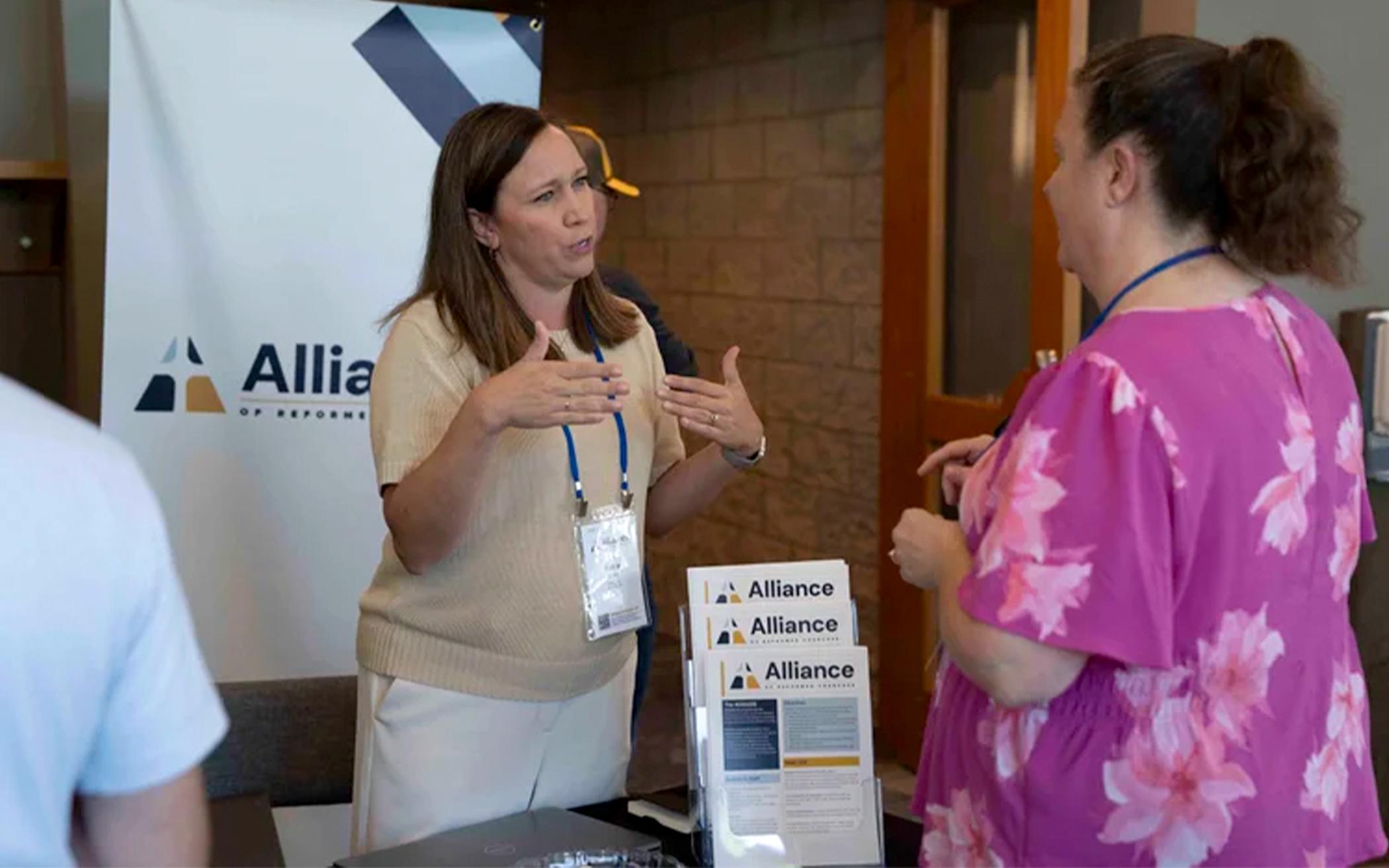
In June, the Alliance for Reformed Churches updated its Unifying Beliefs “to provide greater clarity and understanding” regarding its statement on the ordination of women to the offices of deacon, elder, and pastor. The update came after more than a year of “prayer, thoughtful dialogue, and careful discernment” with the relatively new denomination’s Theological Discernment Team, the eight Alliance Network Boards, and the Alliance Board, said a June 17 email announcement about the change.
Previously the statement referred to “two theologically acceptable positions regarding ordained offices in the Church. One position ordains women into the ordained offices, the other limits the ordained offices in which women can serve.”
Now, instead of affirming two positions, the statement notes each congregation’s “authority to determine its position and practice regarding ordination of women.”
The new statement reads: “We believe … each congregation has the authority to determine its position and practice regarding ordination of women to the offices of deacon, elder, and pastor. Some will affirm qualified men and women in holding ordained offices whereas others will affirm qualified men in holding ordained offices. We respect each view and each congregation’s choice regarding the nature and extent of ordained leadership.”
The last sentence of the statement, respecting each view and each congregation’s choice, is unaltered from the original.
The Unifying Beliefs span three pages and include statements arranged under theological, relational, and structural beliefs. Like the Christian Reformed Church, which is in ecclesiasticsal communion with the Alliance of Reformed Churches, the Unifying Beliefs affirm the Apostles’, Athanasian, and Nicene Creeds as uniting all Christians in the global church and affirm the Heidelberg Catechism, Belgic Confession, and the Canons of Dort as historic Reformed expressions of the Christian faith.
The Unifying Beliefs name the Belhar Confession, a justice-oriented church confession developed in the 1980s by the Dutch Reformed Mission Church in South Africa, “an addendum to the Belgic Confession, to give its call to unity a more biblical context” and the Great Lakes Catechism on Marriage and Sexuality “an addendum to the Heidelberg Catechism, to give its teaching on human sexuality a more biblical context.”
Written by Branson Parler, associate professor of theological studies at Kuyper College in Grand Rapids, Mich., the marriage and sexuality framework was commissioned by the Regional Synod of the Great Lakes in the Reformed Church in America and commended by the RCA’s general synod in 2018. (Revisited in 2019, the RCA did not adopt the catechism as a catechism of the church.)
The CRC has categorized the Belhar Confession as a contemporary testimony of the church. The denomination's committee to articulate a foundation-laying biblical theology of human sexuality (generally referred to as the human sexuality report committee) included the Great Lakes Catechism on Marriage and Sexuality as an appendix in its interim report to Synod 2019.
The Christian Reformed Church’s position on women in ecclesiastical office is, “All congregations in the Christian Reformed Church in North America may allow women to serve in the office of minister, elder, deacon, or commissioned pastor. The CRC recognizes that there are two different perspectives and convictions on this issue, both of which honor the Scriptures as the infallible Word of God.”
The Alliance of Reformed Churches began organizing in 2021 and received its first members, a group of departing RCA congregations, at the beginning of 2022. First approved as a church in cooperation with the CRC in 2023, the Alliance was invited in 2025 to in communion status. The CRC’s ecumenical relationships are maintained by the synodically appointed Ecumenical and Interfaith Relations Committee.
About the Author
Alissa Vernon has served as news editor for The Banner since July 2017. She and her husband have three children, with one still at home in St. Catharines, Ont., where the family attends Covenant Christian Reformed Church.