
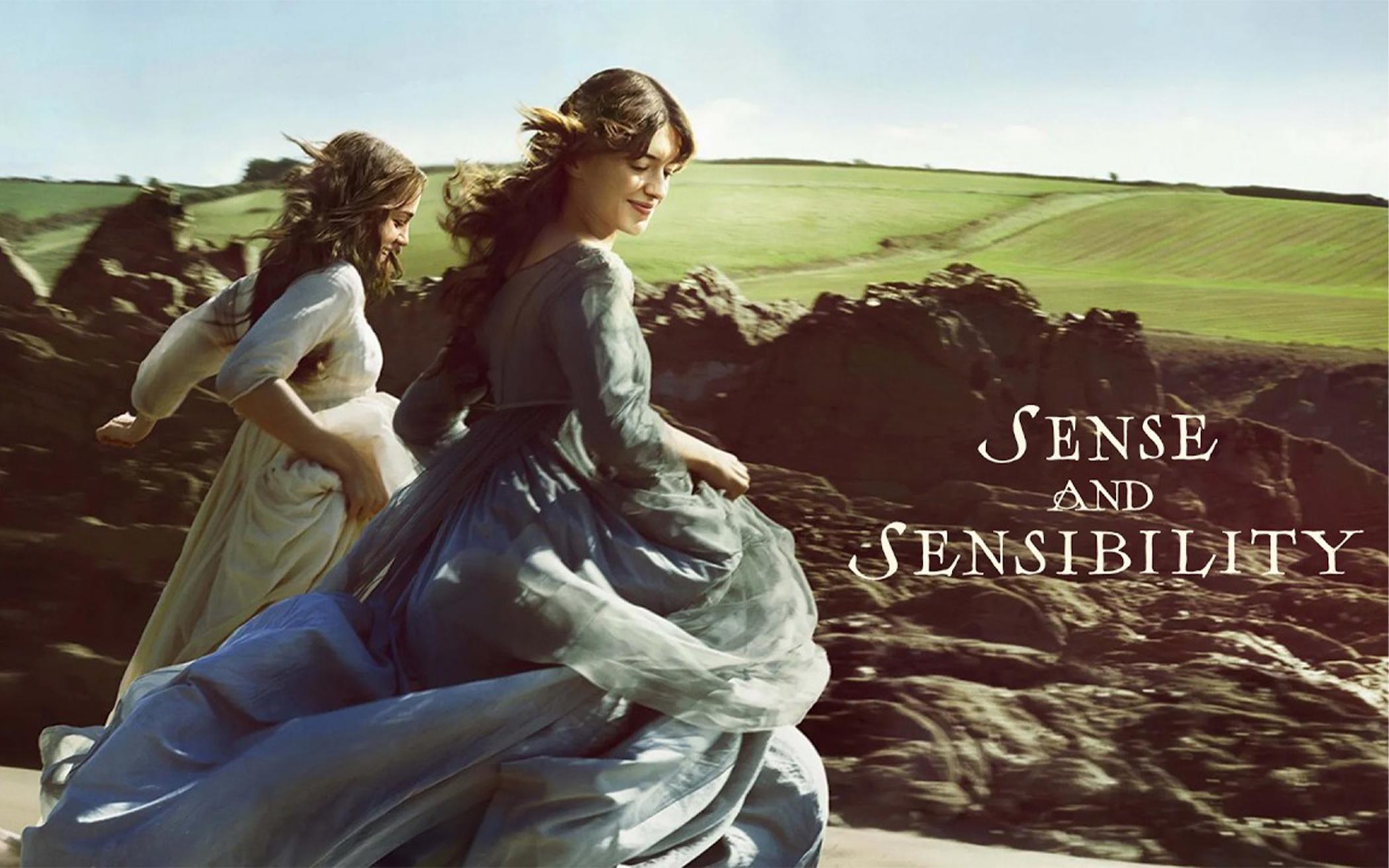
Although many purists and lovers of Jane Austen’s work objected to the newest adaptation of Sense and Sensibility, I was not one of them.
True, the 1995 version, starring my beloved Emma Thompson, Hugh Grant, and Alan Rickman, is ensconced in my top two movies (No. 1 is You’ve Got Mail, which—this just in—is being remade!)
But a soul as wise and witty as Austen cannot be confined to just a few adaptations. Creative people of every generation will want to interpret her work and bring their own nuances and passions to retell her stories and reinvent her characters.
So I was wide open to director Georgia Oakley’s version, starring Daisy Edgar-Jones as Elinor and Esme Creed-Miles as Marianne. The sisters have different temperaments and contrasting approaches to love, i.e.: sense and sensibility.
These different approaches are thrown into sharp relief when the sisters (including little sister Margaret) and their gentle, elegant mother, Mrs. Dashwood (Catriona Balfour) are ousted, emotionally anyway, from their home and relegated to a sharply downsized existence.
It’s a tribute to their characters that the women all adjust with good grace, even though there is an unmistakable undercurrent of “what will we do?”
In rolls the immutable Mrs. Jennings, one of my all-time favorite characters in fiction. Fiona Shaw as Mrs. Jennings is the funniest character in the film as she winks and wiggles her eyebrows and makes the clunkiest innuendos ever in her quest to find suitable (and hopefully rich) husbands for the Dashwood sisters, despite severe setbacks in their standards of living.
(Dare I say it? This film’s Mrs. Jennings has surpassed 1995’s version!)
Mrs. Jennings’ sole purpose in life is to marry off Elinor and Marianne (while Margaret waits in the wings for her moment to be thrust upon society), so she can hardly believe her luck when two potential husbands just wander onto the scene.
First there is Edward Ferrars (George MacKay), the kind, shy, and dignified brother of the sisters’ horrible sister-in-law, Fanny (Stacy Martin, also a comedic bright spot). He and Elinor immediately spark a real connection, and their chemistry is a delight. Both will suffer for their feelings before the conclusion, and both actors are excellent at conveying nobility and honor through quiet despair.
Then there is Colonel Brandon, also a great favorite of mine, who is played here by Herbert Nordrum. Considering my attachment to Alan Rickman’s Brandon of 1995, I was surprised to find myself liking and rooting for Brandon in this film. Nordrum displays Brandon’s raging waterfall of feelings for Marianne in subtle, sweet ways that eventually capture the viewer’s heart and Marianne’s. (Still, Rickman is forever Brandon to me.)
Frank Dillane as Willoughby fell flat to me. It was hard to imagine why Marianne, as passionate and impulsive as she is, would lose herself so wholly in this superficial man, as appealing as he might have seemed at first glance.
This version is quieter, less funny, and more contemplative than 1995’s. It is stunningly shot in autumnal, sepia tones, with radiant scenes of the natural world. The aesthetic is dreamy, yearning, and gentle, an ode to the things that £10,000 a year cannot buy.
Some critics have found it to be emotionally flat, but I loved the focus on the two sisters, their deep love, and the differences in nature they must navigate to love each other better. While 1995’s version ends with a wedding, this version concludes with the two sisters sharing a close moment. It’s a subtle yet distinctive shift that honors a different kind of love.
Christian viewers will appreciate the sacrificial love and integrity displayed by Brandon, Edward, and Elinor. These characters live by their convictions and do the right thing, even if it costs them everything.
“I will be calm. I will be mistress of myself,” Elinor says in a moment of emotional upheaval. In her life and words, this character shows us the fruit of a life defined by patience and dignity. In her unwavering, honest portrayal, Daisy Edgar-Jones evokes Elinor’s virtue, goodness and character. She shows us another model for a literary role model, a heroine for the ages. (Focus Features, rated PG, in theaters and streaming online.)
About the Author
Lorilee Craker, a native of Winnipeg, Man., lives in Grand Rapids, Mich. The author of 16 books, she is the Mixed Media editor of The Banner. Her latest book is called Eat Like a Heroine: Nourish and Flourish With Bookish Stars From Anne of Green Gables to Zora Neale Hurston.