
A report reflecting on the practice and purpose of membership in the Christian Reformed Church is ready to be presented to Synod 2026, as requested by Synod 2024. The Defining Membership Task Force report, 15 pages and a two-page appendix, recommends that synod “remind consistories of the privilege and responsibility of discerning how to invite believers to membership and disciple them faithfully; … encourage churches to use approved liturgical forms … in the administration of the sacraments or in celebrating public profession of faith; … encourage churches to develop and use membership and profession of faith classes that foster a commitment to the Reformed confessions” and to commend the report to the churches, “noting again the distinction in confessional commitment required of officebearers in comparison to that of confessing members.”
It was that question—the relative required commitment to the CRC’s historic confessions for congregation members—that prompted the creation of this task force in 2024. Addressing a request from Andrew Aukema, pastor of Inglewood CRC in Edmonton, Alta., to articulate what is expected of confessing members, Synod 2024 asked the Office of General Secretary “to provide theological reflection and advice on the historical, biblical, and theological aspects of membership. After receiving thoughts from Calvin Theological Seminary and appropriate CRCNA agencies regarding the differences in confessional subscription for members and officebearers, report back to Synod 2026.”
Reflecting theology summarized in the Belgic Confession and the Canons of Dort, the report notes, “To belong to the church begins with being ‘chosen,’ not simply with our ‘choosing.’ The church consists of members gathered by the electing love of God into the fellowship of his people sanctified by Christ’s blood and by the work of the Holy Spirit.” Having established that basis, it also notes, “While membership in the body of Christ is fully a gift of God’s grace, the CRC has long recognized that our shared witness to Christ in the world as members of that body includes some sort of content that we affirm together.”
After introducing the background for the report and recalling the doctrinal, sacramental, and ongoing discipleship aspects of church membership, the report shifts to the content of confessing membership in the CRC, the role of the local consistory and current practices in CRC congregations, practical implications for membership issues, and concludes “in general it can be said that membership in the CRC has been grounded in the baptismal call that brings an individual into the covenant community of God’s people. This baptismal call points toward obedient participation in the Lord’s Supper and a public profession of faith under the direction of the elders of a local church. This profession of faith involves some kind of affirmation of the Reformed confessions as ‘faithful reflections’ of the gospel message, or at least as the framework that provides the ‘spiritual guidance’ of the church to which one belongs.”
Naming the context in which these reflections took place—within a culture that “no longer reinforces the value of membership commitments”—the task force noted, “We all benefit from the common vocabulary around membership commitments provided by our liturgical forms and synodical statements, and we would do well to foster a robust and consistent use of this vocabulary throughout our churches,” yet “we cannot assume that everyone around us knows the meaning of the statements we make in those forms—or even that people acknowledge the value of a formal commitment to the church.” Thus, the task force recognizes “the value of framing membership as a ‘journey’ in which formal admission to membership is only one milestone in a walk with Christ that includes—among other things—continual repentance from sin, joyful embrace of godly living, public commitment to Christ, participation in the Lord’s Supper, and a desire to share in the work of the church.”
Reiterating that the task of making, baptizing, and teaching disciples faithful obedience to the way of Christ “is an inherently local and relational one,” the task force recommends that synod do the following:
- Commend to the churches the reflections and advice in the report, “noting again the distinction in confessional commitment required of officebearers in comparison to that of confessing members.”
- “Remind consistories of the privilege and responsibility of discerning how to invite believers to membership and disciple them faithfully … and to urge continued reflection about the balance between confessing membership rooted in the ecumenical creeds and an approach rooted in the Reformed confessions.”
- “Encourage churches to use our approved liturgical forms, or adaptations of them that conform to synodical guidelines … and instruct the Office of General Secretary to make progress toward providing translations of all of these forms in the languages used in the churches.”
- “Encourage churches to develop and use membership and profession of faith classes that foster a commitment to the Reformed confessions, and to reflect on the ways in which this goal might require adaptation of programs developed in other theological traditions when our churches make use of these programs.”
Finally, in a two-page appendix, the report addresses the reality of inactive members and points to past advice of synod “to assist consistories in addressing these realities.”
Assigned to the Office of General Secretary, the report will be part of the Council of Delegates’ report to Synod 2026, which makes up a hefty portion of the synodical agenda each year. The Council of Delegates, composed of classical and at-large members throughout the Christian Reformed Church in North America, provides denominational oversight on behalf of synod throughout the year. The Office of General Secretary serves as the primary link between the Council and the denomination’s ministries.
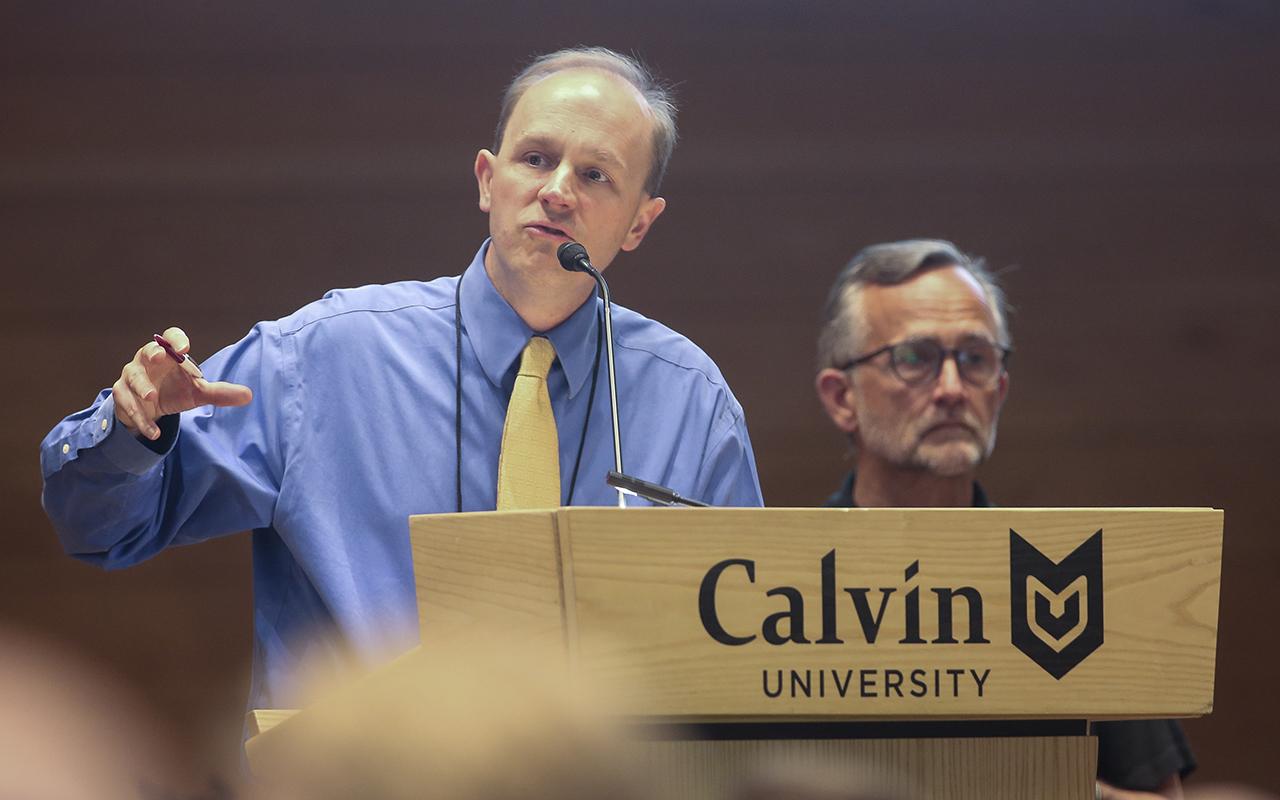
Synod 2026, the annual general assembly of the Christian Reformed Church in North America, is meeting June 12-18 on the campus of Calvin University in Grand Rapids, Mich. Go to crcna.org/synod for the livestream, photos, reports, and a live blog of synod proceedings and decisions. Find daily news and our video Synod Recap at thebanner.org/synod.
About the Author
Alissa Vernon is the news editor for The Banner.