I’ve been a Christian for most of my life. I grew up hearing the Bible stories, singing the hymns, praying at mealtimes. I’ve read theology books and led small groups. I’ve stood in sanctuaries, recited creeds, and proclaimed truths I still believe.
But every now and then, doubt comes and sits beside me. It doesn’t knock first. It doesn’t announce itself. It settles in quietly like an unwelcome guest who knows the way around the house. And when it does, I feel like a man whispering into the void. I still pray, still read, still sing, but some days I wonder if anyone is really listening. This used to terrify me.
For a long time I thought doubt was a sign of failure. I thought mature faith meant certainty, and anything less was spiritual weakness. I imagined that strong Christians didn’t struggle with questions. They walked with heads held high, sure of every step. So when my heart hesitated, I felt ashamed. I kept those questions tucked behind polite nods and practiced prayers, hoping they would just go away.
But here’s the strange thing. Doubt has not destroyed my faith. In some ways it has deepened it. When I stopped running from doubt and started asking honest questions, I discovered something I hadn’t expected. God is not threatened by our uncertainty. He does not turn away when we waver. In fact, Scripture is full of people who wrestled with doubt and still found their way into the heart of God’s story.
Bible Stories
Think of Job, who shook his fist at the heavens and demanded answers. Or Jeremiah, the “weeping prophet,” who cried out in frustration, “You deceived me, Lord, and I was deceived” (Jer. 20:7). Or David, who in Psalm 13 wrote, “How long, Lord? Will you forget me forever? How long will you hide your face from me?” These were not moments of polished devotion. They were raw, honest cries. And they are recorded not as failures, but as faithful expressions of a relationship with a God who invites truth from his people.
Even John the Baptist, who once pointed directly at Jesus and declared, “Behold, the Lamb of God,” later sent word from prison asking, “Are you the one who is to come, or should we expect someone else?” (Matt. 11:3). That story has always struck me. John, who had heard the voice from heaven and baptized the Messiah himself, still had doubts when the prison walls closed in.
And how did Jesus respond? Not with rebuke. Not with disappointment. He told John’s messengers, “Go back and report to John what you hear and see: the blind receive sight, the lame walk ... and blessed is anyone who does not stumble on account of me” (Matt. 11:4–6). Jesus affirmed John’s place, his calling, and his questions.
I’ve come to believe that doubt is not the opposite of faith. The opposite of faith is indifference. Doubt means we still care enough to ask. Still care enough to wrestle. Still care enough to long for answers. And wrestling has always been part of the journey. Jacob didn’t become Israel until he had spent the night in struggle.
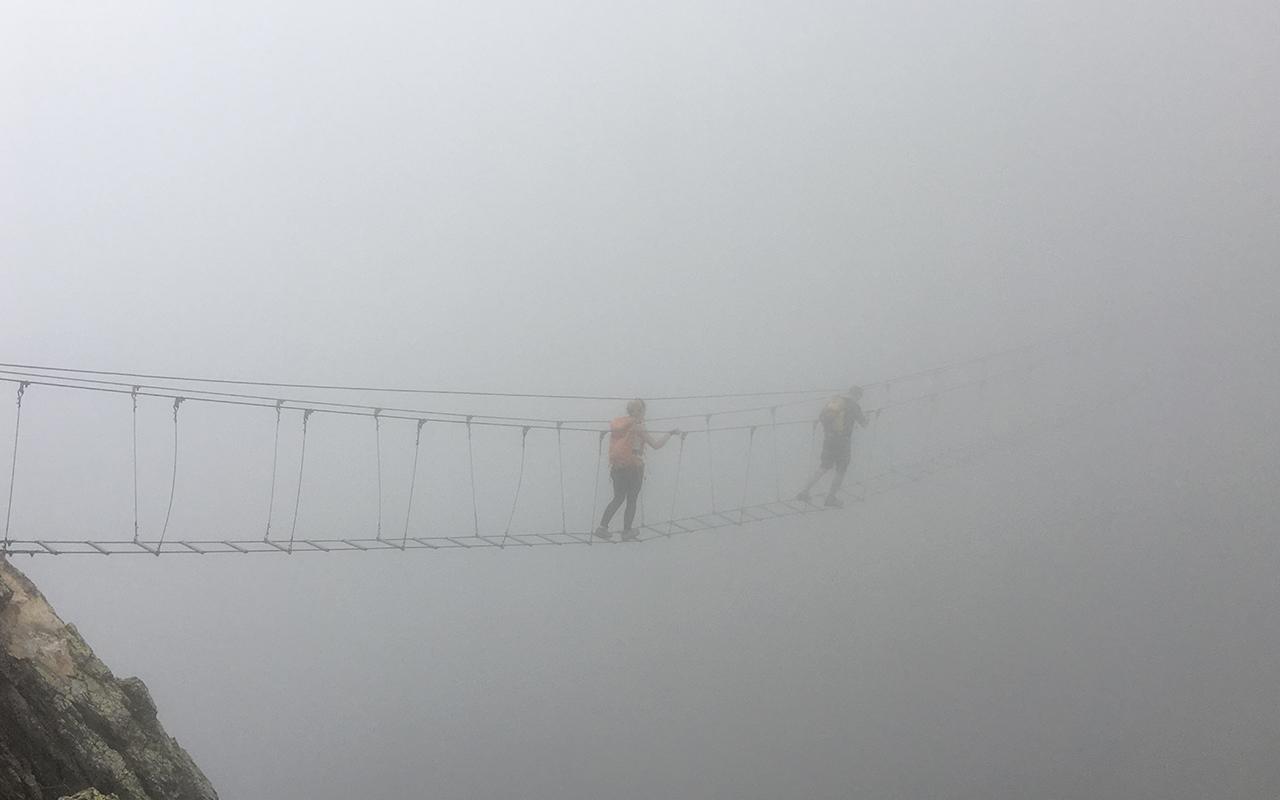
Some of the most faithful people I know are those who have walked through the valley of doubt and come out holding on to hope—not a loud, showy hope but a quiet, sturdy one. The kind that has been tested in silence and tears. The kind that keeps showing up, even when the skies are grey.
God is Faithful
I won’t pretend I’ve got it all figured out. There are still days when the mystery of God feels overwhelming, when suffering seems senseless or prayers feel unanswered, when I read Scripture and walk away with more questions than clarity. But I’m learning not to panic when that happens. My faith is not built on my feelings. It’s not propped up by emotional certainty. It is built on the character of God, who is faithful even when I am unsure. “If we are faithless, he remains faithful, for he cannot deny himself” (2 Tim. 2:13). That verse has become a quiet anchor for me in moments of spiritual fog.
And the more I’ve leaned into that truth, the more I’ve seen how God meets us in our questions. Not always with answers, but with presence.
There is a story in the Gospel of Mark that has become one of my favorites. A desperate father brings his tormented son to Jesus and says, “If you can do anything, take pity on us and help us.” Jesus replies, “If you can? Everything is possible for one who believes.” The father responds with words I’ve prayed many times myself: “I do believe; help me overcome my unbelief!” (Mark 9:22–24). Jesus doesn’t turn him away. He heals the son.
Faith and doubt can live in the same heart. And God, in his mercy, honors even our faltering belief.
So these days when doubt shows up, I don’t treat it like a curse. I acknowledge it. I ask my questions. I return to Scripture—not for easy answers, but to be reminded of the story I’m a part of. I speak honestly with trusted friends. I keep worshiping. I keep praying. I keep going to church—sometimes with enthusiasm, sometimes with a whisper.
More often than not, those questions lead me back to the feet of Jesus.
Even when doubt sits beside me, I’m learning not to fear it. The One I follow is not fragile. He is patient. He is kind. He is Emmanuel—God with us—even in the quiet, shadowed places of our faith.
He’s not going anywhere. And neither am I.
About the Author
Dan Veeneman is a lifelong learner, avid reader, and writer who enjoys exploring the places where faith, life, and culture intersect. He lives in St. Albert, Alberta, with his wife and three children, and they worship at Sturgeon Valley Baptist Church. When he is not writing, Dan can often be found with a good book and a cup of coffee. He writes regularly on faith and life at Dan Veeneman’s Substack.