
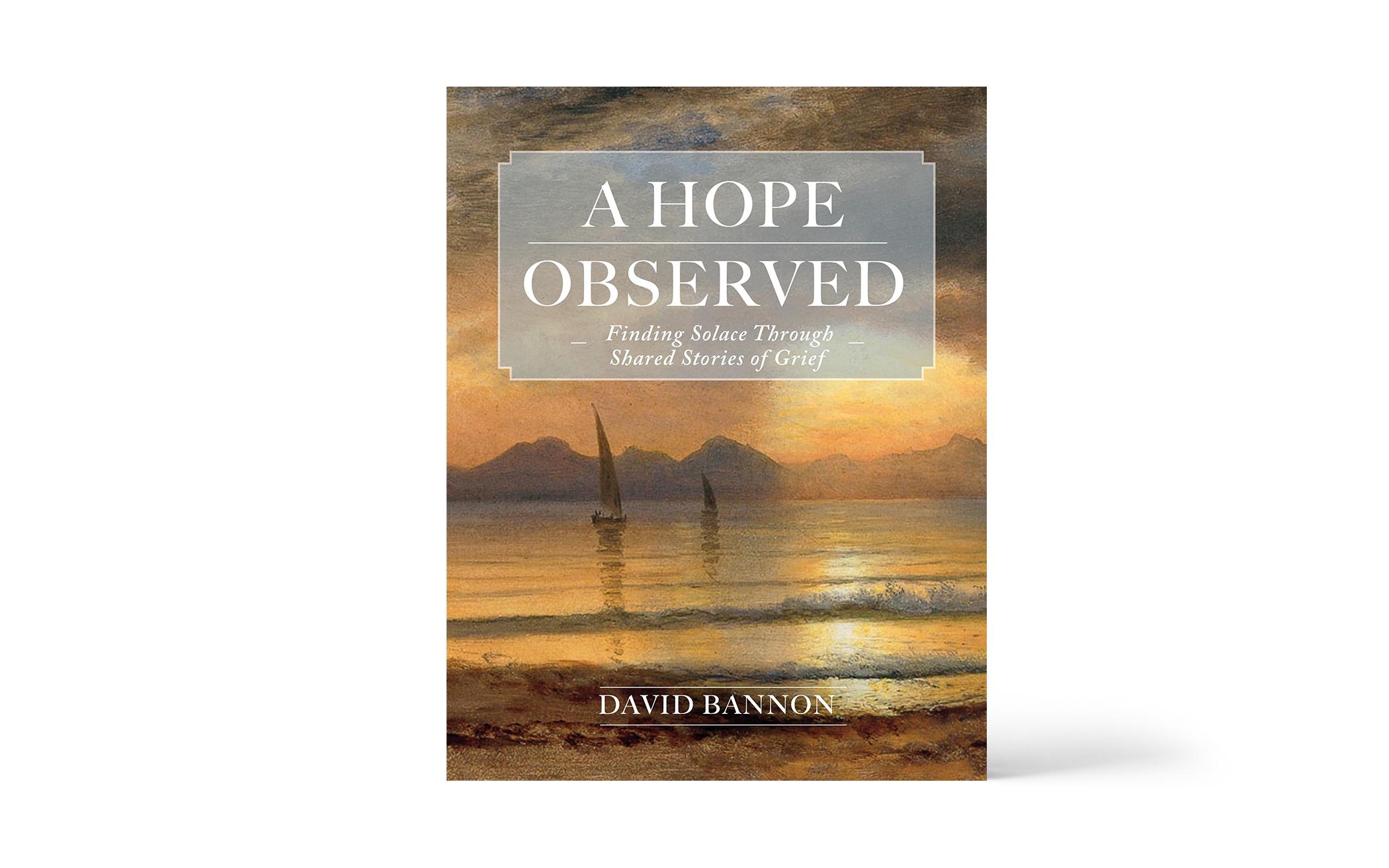
This summer was the 20th anniversary of my dad’s death. My beloved dog had just died. A dear friend had lost her young adult son to cancer. So I was in a reflective frame of mind to receive the robust wisdom in A Hope Observed, a book about grief by a masterly writer and bereaved father.
At first, I didn’t connect what I was reading with my dad’s death so many years before, but a meditation about Abbott and Costello hit me between the eyes. My dad had adored the old-time comic duo, laughing so hard he cried as we watched black-and-white movies such as Abbott and Costello Meet Frankenstein. As I read about Lou Costello’s grief over losing his 7-year-old son, Butch, my dad felt nearby on my patio, in the birdsong, the breezes, and the story of a very funny man who mourned, too.
Carol Burnett, herself a bereaved mother, saw in Costello’s comedy hints of true sadness. “Heartbreak and howls may seem far apart, but actually they are not,” she said. “Beneath it all was this subtle layer of tragedy.”
In reading this book, Lou Costello became a companion in grief, across space and time, as did Mary Shelley; Joan of Arc’s mother, Isabelle; presidents such as Theodore Roosevelt, Abraham Lincoln, and Dwight Eisenhower; and other famous and obscure people whose lives were shaped by loss.
Bannon explores the grief of Martin Luther, who, before the death of his daughter Magdalena at 13, would comfort bereaved parents rather glibly with “the Lord giveth and taketh away,” yet when he encountered his own terrible loss, wondered how anyone survived such a thing. It changed everything about the way he comforted his followers. “Never again would Luther offer callous bromides to fellow mourners,” Bannon writes.
Mary Shelly, author of Frankenstein, suffered huge losses, including that of a child, and famously played with, in her most famous work, the idea of bringing someone back to life.
I was struck by how William Shakespeare’s loss of his son, Hamnet, had a monumental influence on everything he would write afterward. “Give sorrow words,” he wrote in Macbeth 10 years after Hamnet’s death. Scholars have studied Shakespeare’s works and found 140 instances of “grief-associated symptoms.” Four hundred years later, Shakespeare helps us navigate grief.
Bannon, a former grifter whose life deserves a biopic (there is at least one documentary), weaves his story of losing his young adult daughter, Jess, to a drug overdose with other stories of grief and the wisdom of N.T. Wright, Henri Nouwen, Lewis Smedes, Wendell Berry, and others. Scripture anchors each meditation, and glorious paintings by Rembrandt, Monet, Van Gogh, and Renoir enrich the words and stories.
There are no platitudes here. Instead, Bannon invites readers into a kind of lament that is gut-wrenching, refreshing, and healing all at once. “We are desperate for any hint of our loved ones. Spare us homilies … we may muse. We are surrounded by ashes and need to know: Where are they now? Will we see them again? After all, how they died is not nearly as important as who they were to us.”
This hardcover book is substantial in every way, thoughtful, consoling, and nourishing. A hard-won note of hope rings through the valleys of desolation. It would be a meaningful gift for anyone encountering their own loss, and a companion for those who feel bereft and alone in their sorrow. Even if many people can’t fathom the grief of another, Bannon and this cloud of witnesses understand, bear witness, and offer comfort.
Readers will journey through this book with the rich knowledge that grief and love abide together.
“Today this very day, we know our love does not end,” Bannon writes. “Our bonds continue; our dreams will one day be reality.”
(Paraclete Press)
About the Author
Lorilee Craker, a native of Winnipeg, Man., lives in Grand Rapids, Mich. The author of 16 books, she is the Mixed Media editor of The Banner. Her latest book is called Eat Like a Heroine: Nourish and Flourish With Bookish Stars From Anne of Green Gables to Zora Neale Hurston.