
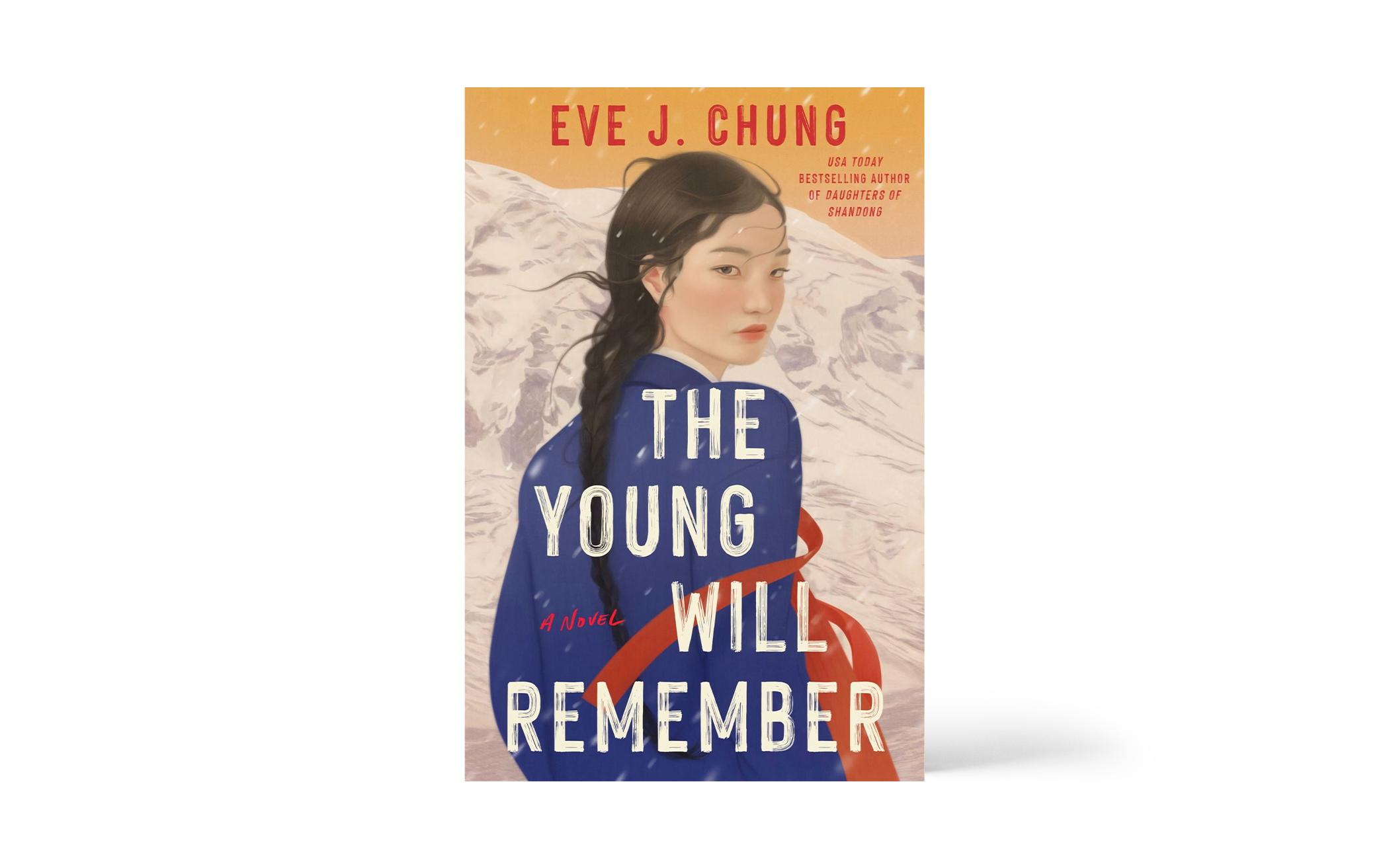
Chinese American Ellie Chung, a native of California raised by ethnic Chinese parents who were born and grew up in Taiwan under Japanese colonial rule, understands the pain of straddling two worlds, a depth of wisdom that will prove invaluable to her in the years ahead.
In 1950, 28-year-old Ellie is stationed in Japan as a correspondent for the Global Tribune covering the war in Korea. When Ellie convinces her friend, a Japanese American military pilot, to allow her to accompany him on a flight to cover a battle in North Korea, she has no idea how the trajectory of her life will be altered. What she does know is that being a war correspondent demands that she shields her heart from despair: “There was a weight in my work, and if I wasn’t careful it would drag me under. In the maelstrom of war reporting, I could not be a brittle boat, or even a battleship. I had to be an anchor and sink on my own terms, controlled and unyielding. Only then could I bring myself up again. Only then could I keep coming back again—to watch again and write again.”
When their plane is shot down in North Korea, Ellie expects to be captured by enemy forces or shot to death on the spot. However, as a stream of fleeing refugees pass by looking on warily, a hysterical woman confronts Ellie’s captors, claiming that the young woman is her long-lost daughter whom she has for many years been searching for. Her relentless haranguing leads to Ellie’s release. Because she doesn’t understand the Korean language, Ellie has no idea what transpired and why the woman, who calls herself Emma, is leading Ellie into the mountains. Where are they going? And why did Emma secure Ellie’s release?
When Emma and Ellie arrive at a modest home, Ellie eventually learns that the owners are Christians: Pastor Pak, his wife, and their adult son, who can speak Japanese and English. As Ellie stays with them, they begin to share pieces of their story in the languages that Ellie can understand. However, so much more is being discussed, often vehemently with voices raised, in Korean, so Ellie once again finds herself straddling two worlds and experiencing the disorientation that comes with it.
In The Young Will Remember, readers are invited into the poignant and painful developing relationships and friendships between Ellie, Emma, and the Paks, even as the war forces them to encounter horrific circumstances: the reality of young girls captured to be used as “comfort women,” a euphemism for military sex slaves; relentless bombing and annihilation; starvation and horrendous acts committed in order to survive; and countless lives lost on both sides, many of them young boys caught up in a dream that they would never realize.
In an author’s note, Eve Chung, a human rights lawyer who focuses on women’s rights, writes, “Like Ellie, I consider myself a small cog who fights by amplifying voices that need to be heard. There are stories that keep me up at night, and I write them down—and with them, a part of my soul. I aspire to keep these histories alive, and through this work, I hope that the young will learn. And the young will remember.”
The Young Will Remember, a work of historical fiction that includes some profanity, is skillfully plotted, extensively researched, and justice oriented. Especially meaningful for Christian readers will be the author’s focus on Christians in North Korea, which she based on the lives of her husband’s grandfather, a pastor from Pyongyang, and his Christian wife whom he met in a refugee camp in the Korean War.
(Berkley)
About the Author
Sonya VanderVeen Feddema is a freelance writer and a member of Covenant CRC in St. Catharines, Ontario.