A few years ago, I visited the real Little House on the Prairie outside of Independence, Kans. It was my second visit (I’m a serious fan, and also my son lives in Kansas), and I was surprised and delighted to see that this time, the gift shop was carrying books such as the Birchbark series by Indigenous author Louise Erdrich, hailed as a First Nations take on frontier life for middle-grade readers.
“We are working with local Osage to tell the whole story,” the young woman at the gift shop explained.
Having just listened to the audiobook of Little House in the car, I thanked her. It was far past the time to tell the broader story of the people who populated the West, and to not sugarcoat the true price of pioneer progress.
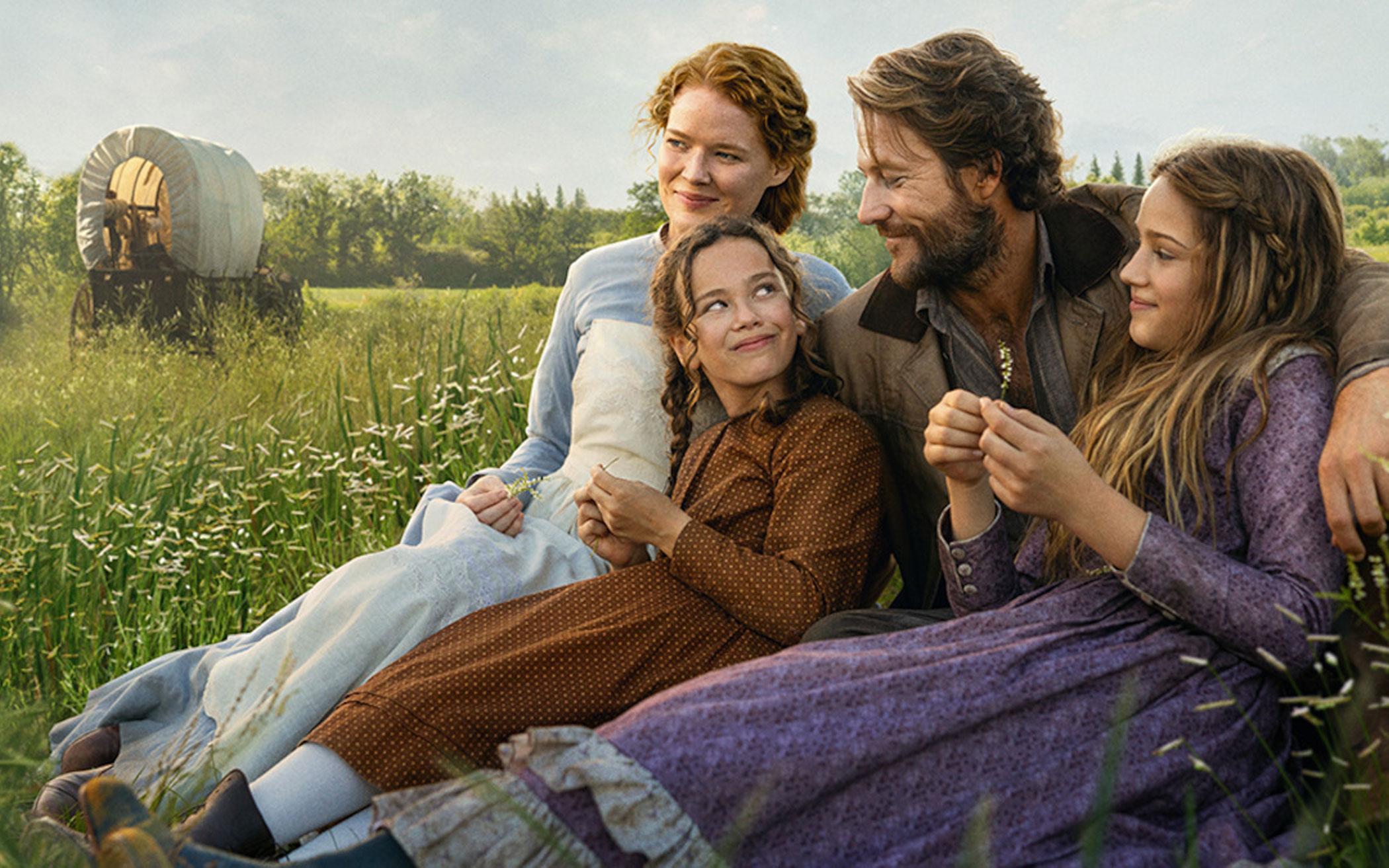
The new adaptation of Little House on the Prairie grapples with the hard realities of Indigenous displacement, while it also honors the grit and endurance of the pioneers. It brings back real-life characters beloved by generations, Pa (Luke Bracey) and Ma (Crosby Fitzgerald), Laura (Alice Halsey) and Mary (Skywalker Hughes), fictionalized by Laura Ingalls Wilder in the 1930s.
(Yes, real life and fiction! No wonder it’s hard for viewers to accept any adaptation as “correct” when even Wilder herself blurred the lines between fact and fiction.)
While the old NBC series, starring Michael Landon as Pa and Melissa Gilbert as Laura, was about 5% based on the books and sometimes veered way, way off (anyone remember the killer clown?), this new series is much more faithful to the book, at least this season is. I’d say it’s 60% on-book.
Many of the iconic scenes hew quite closely to Wilder’s pages, such as Osage men entering the cabin when Pa is gone (the show has Osage consultants to get the language, culture, history and costumes right), Mr. Scott falling in the well and nearly dying of poisonous gas, and Mr. Edwards (Warren Christie) saving Christmas with presents for the girls.
Other scenes are new inventions or more loosely based on the book, such as the heartwrenching episode where the Ingalls family comes extremely close to dying from malaria. In the book and in real life, Dr. George Tann (Jocko Sims), a Black frontiersman, treated and saved the entire Ingalls family from death. (Hardcore fans of the book can visit his grave in Independence as I did. He deserves his own show!)
In this series, however, Dr. Tann saves some, not all of the family, with an assist by a shopboy Mary has a crush on.
It’s these deviations and others (Mary’s brown hair, for example) that have purists riled up, even though this series is, as discussed, far more on-book than the Landon/Gilbert show. It’s amazing to me that people who can easily accept a killer clown on the prairies cannot accept the changed color of Mary’s hair.
One big difference in the two shows is that Michael Landon’s Pa was unfailingly heroic and good, while Bracey’s Pa reveals more of a human, flawed man who brought his wife and children into several dangerous situations to follow his dreams. Viewers seem to want Pa to be perfect, but the real man of the books and historical record show a more complicated story. He was kind, charming, loving, and reckless, capable of building a home on land that legally belonged to the Osage.
Faith is another aspect where the old show and this new series differ, but what was the reality of the Ingalls family and their beliefs? Scholars note that the old show makes it seem as if the Ingalls were devout Christians, but the books offer a much quieter version of the family’s beliefs. This is reflected in the new series through singing hymns together, such as “In the Sweet By and By.” (Pa’s fiddle and the family singing together alone and with friends infuses the series with music and joy.) Alyssa Wapanatâhk as White Sun is frequently seen praying to Wah’Kon-Tah, the “great spirit,” and a cross hangs on the Osage family’s wall.
Alison Arngrim, who played spiteful Nellie Oleson in the old show, makes a cameo in this series, as does Anne of Green Gables portrayer Megan Follows, who plays Laura and Mary’s grandmother in a fever dream sequence.
Filmed outside of Winnipeg, Man., the prairie itself is a character, luminous in its sunsets, waving grasses, and massive sky.
With themes of community, chosen family, and the difficult and ongoing work of reconciliation with all God’s image bearers, this retelling of an American pioneer family’s quest to settle the West is a loving homage to Wilder’s work and an attempt to show the broader lens of history. Season 2, now being filmed, follows the Ingalls family as they move on to Walnut Grove, Minn. (Netflix)
About the Author
Lorilee Craker, a native of Winnipeg, Man., lives in Grand Rapids, Mich. The author of 16 books, she is the Mixed Media editor of The Banner. Her latest book is called Eat Like a Heroine: Nourish and Flourish With Bookish Stars From Anne of Green Gables to Zora Neale Hurston.