
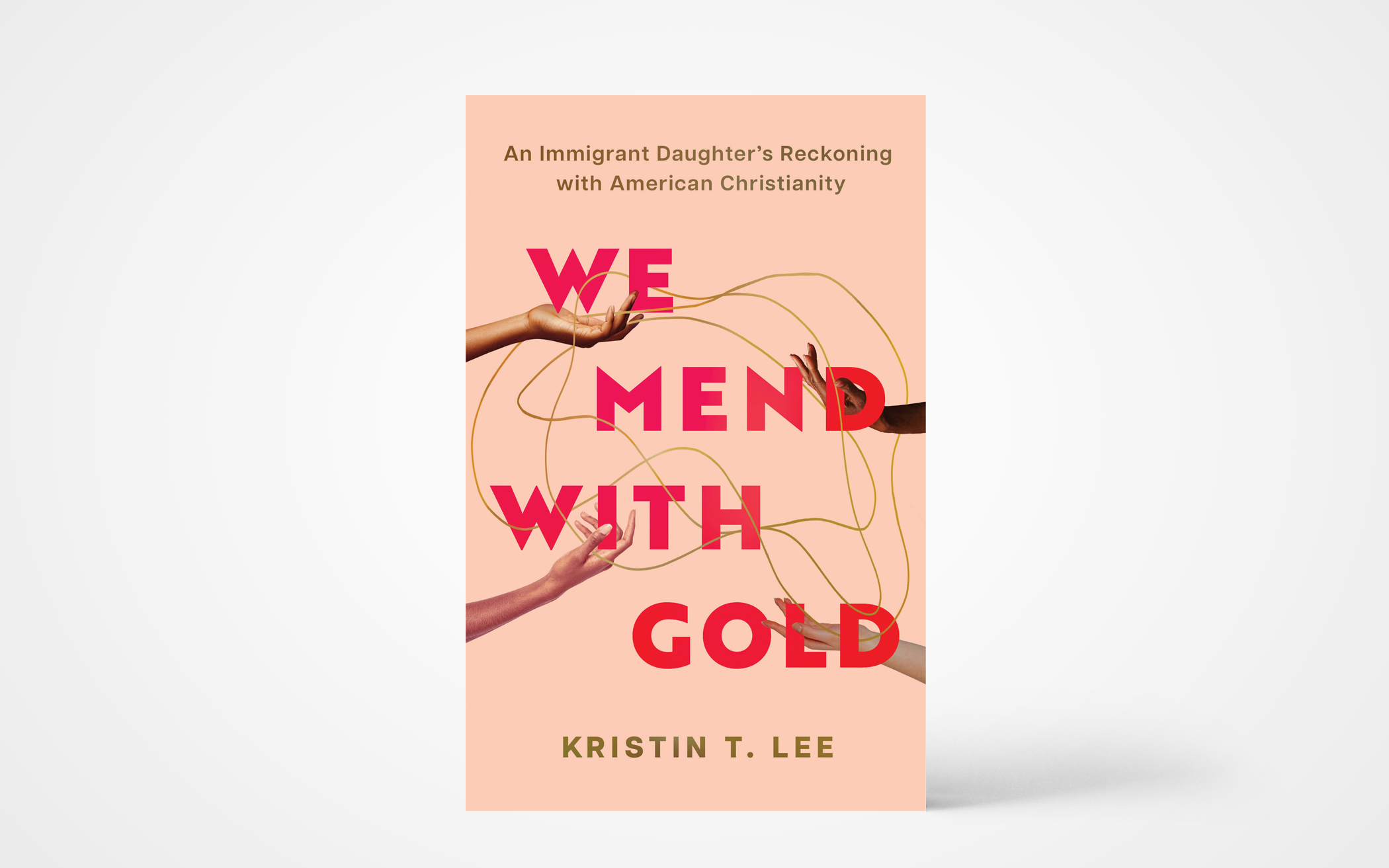
Author Kristen Lee invites readers into her painful, yet eventually healing, spiritual journey by drawing on the metaphor of the Japanese art of kintsugi. She writes, “Kintsugi holds deep theological truths for us. It is an image through which we can bring Asian American theology to the greater church. In kintsugi, broken pottery is mended with gold lacquer. By highlighting rather than hiding fractures, kintsugi artists craft an exquisite kind of beauty. Only by acknowledging our brokenness as individuals and as a people can we repent, heal, and celebrate our humanity as well as God’s boundless love.”
Lee vulnerably and frankly relates for readers her childhood experiences as a second-generation Chinese American immigrant growing up in Iowa: “In pottery terms, the foundation of my faith was thrown by the Chinese immigrant church as well as the white evangelical church, experiences that brought gifts as well as burdens.”
When Lee became an adult, she began to notice how some Western church leaders stifled “all non-white-male-dictated theology as fringe or heretical, thus cutting us off from how our own cultures and histories might inform our spirituality.” It was then that Lee began the journey of de-colonizing her faith, “excising the parts of Christianity informed more by Western imperialism and supremacy than by Jesus.”
With compassion and insight, Lee encourages Asian American readers and others to begin the journey of unlearning theological beliefs learned in childhood that are not rooted in Jesus’ life-giving gospel. She emphasizes five areas: unlearning a theology of scarcity, unlearning a duty-bound theology, unlearning a patriarchal theology, unlearning a theology of insularity, and unlearning a theology of conditional love.
While Lee’s book predominantly addresses Christian Asian American readers, it also opens a window to other marginalized groups of American Christians and their struggles to be listened to, understood, and valued as part of God’s church.
In her epilogue, Lee testifies that “Jesus is the healing gold to my fractured edges,” and she offers encouragement to all who have been injured by the church to return to Jesus’ love and find community once again with his people.
Though readers might not find themselves in agreement with all of Lee’s views, We Mend with Gold is thought-provoking, gut-wrenching, and ultimately hopeful.
(Broadleaf Books)
About the Author
Sonya VanderVeen Feddema is a freelance writer and a member of Covenant CRC in St. Catharines, Ontario.