
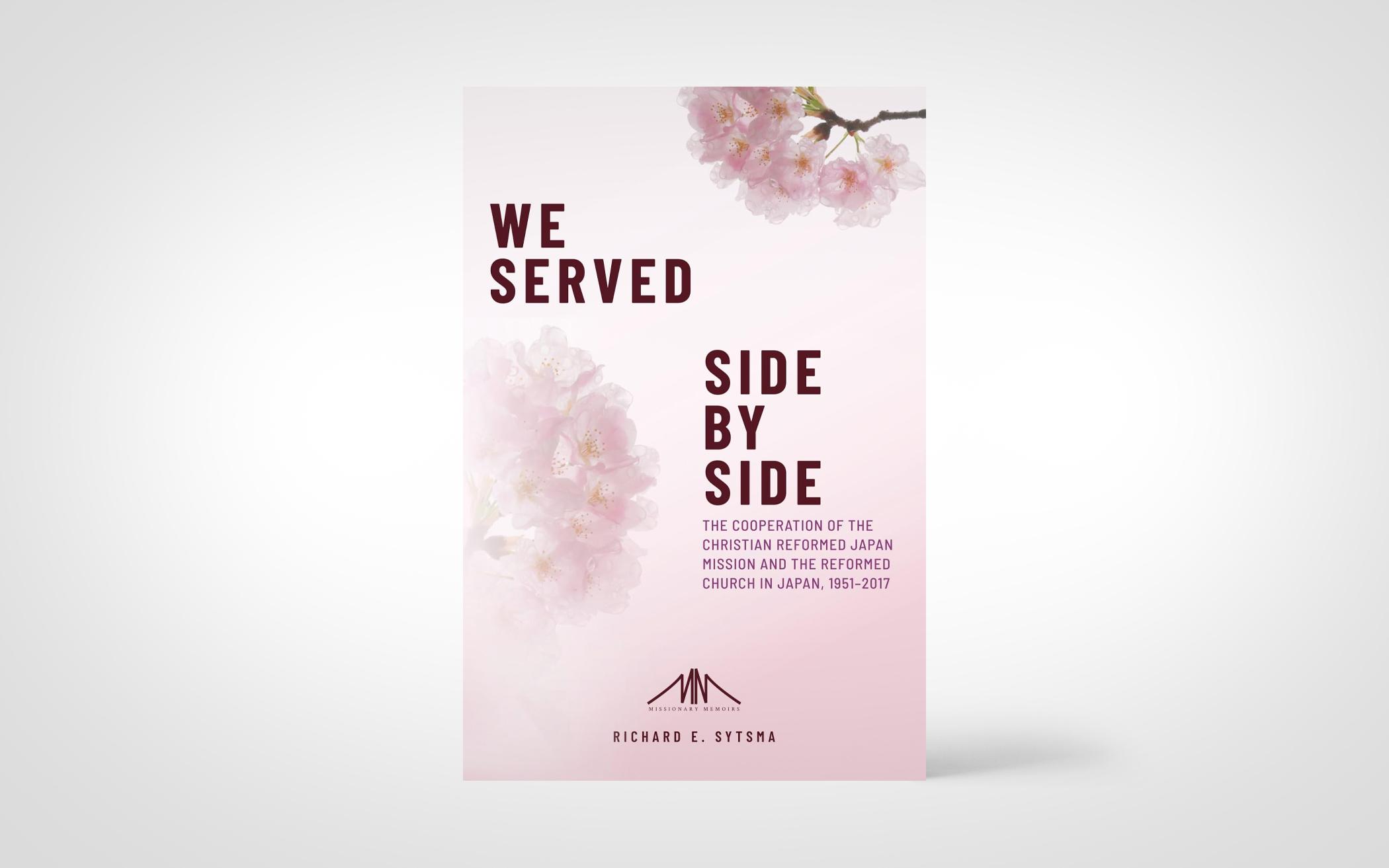
“Senpai” is what Japanese students call those who are ahead of them in their school year (how a freshman would refer to a sophomore, etc.), or what a company employee calls a colleague who started working in the company before them. A less formal word is also used, “Aniki,” which is what one calls a respected older brother. Author Rich Sytsma (called “RE” by his colleagues to distinguish him from his father, “RD”), was my senpai and aniki, my abundantly gifted fellow worker who, like me, was sent as a missionary to Japan by the Christian Reformed Church in North America.
“Side by side” in this book title also summarizes succinctly the relationship of mission cooperation between the CRCNA and the Reformed Church in Japan, though colleagues in the RCJ often referred to the CRCNA as their senpai church. Their use of that term shows their respect and gratitude for the work the CRCNA missionaries did (and continue to do) and their desire to glean actively for theological and practical thinking from which they could benefit. Wise missionaries would do the same, learning from their Japanese brothers and sisters how to engage in effective mission work in the context of Japan’s historical and cultural background, which clearly led to the practice of “side by side” ministry.
RE inherited from his father RD a gift for meticulous record-keeping in extensive files of documents, observations, reports, meeting minutes, and keen analytical thinking. That gift is put to work in this book.
Since Sytsema arrived in Japan as a missionary kid in the early 1950s, he was personally acquainted with the earliest generation of Christian Reformed missionaries, and he was witness to their work in strategies that weren’t always based on missiology that was appropriate to the Japanese context. The CRCNA’s thinking about and commitment to missions was still maturing and would go through many changes, and Sytsma’s book tells the part of that story that played out in NE Asia. Besides giving a very thorough account of the work in Japan, the documentation of changing organizational structures (in North America) and thinking about how mission work might be more effectively carried out in the somewhat unique context of Japan provides substantial material for reflection that can help steer those who love Jesus’ mission even now, decades later, and in many other locations around the world.
Japan is known as a nation of people who are very resistant to the gospel, officially a so-called “unreached people group.” But Sytsma provides good reason for praise and thanksgiving to the Lord who enabled his servants to accomplish much to expand the Church and Kingdom of God, especially with the stellar record of new churches planted and established. There were also failures and disappointments to reflect on, as Sytsma’s account reminds us. Yet the delightful and fruitful partnership between the CRJM and the RCJ is wonderful to read about, and it was also my privilege to enjoy that working relationship as I embarked on my own career as a “church planter” in Japan, benefitting from those faithful senpai who had gone before me.
Sytsma is very thorough in his documentation, and he treats things like relations and discussions between the field missionaries and the home office (and sometimes also Synod) carefully, perhaps being a bit too gentle and treating the conflict that occurred with too light a touch. There were also conflicts on the field, though the practice of consensus decision-making was always given prime importance.
Sytsma also gives interesting information about missionary life and the joys and difficulties of raising families in Japan. The environment could sometimes be hostile but far more often it was welcoming and enriching– foreigners might even be treated like celebrities, though maybe we were sometimes a nuisance! Despite occasional tensions and disagreements, the relations between the side-by-side partners were characterized by deep, mutual respect and the kind of love that Jesus prayed would be the hallmark of his disciples. And in the background was the generous support and persistent prayers of the sending churches. God answered those prayers abundantly, helping the RCJ to become also a missionary sending church.
As I read through the book, I could not help but recall many anecdotes, sometimes painful memories but far more often recollections that would bring a smile to my face. Maybe another volume could be written that would focus on those sorts of things. There are indeed many stories to be told of everything from childbirth in a Japanese maternity hospital, to climbing to the peak of Mount Fuji, missionaries and cooperating evangelists baptizing each other’s children, enjoying a world-class concert of Bach’s St. Matthew’s Passion, watching the missionary kids’ team take home the victory flag of the Far East conference of international schools tournament, or chowing down on the best sushi in the world.
I hope this book will be read by many so that they might uncover the great amount of knowledge and blessings that are found on its pages. May the Lord also use it to stimulate more devotion to his mission and lead to great growth of his kingdom in the Land of the Rising Sun, where even now so many millions wait to be challenged to believe in him. (Van Raalte Press)
About the Author
Lawrence Spalink is a retired CRCNA missionary to Japan.