
As I Was Saying is a forum for a variety of perspectives to foster faith-related conversations among our readers with the goal of mutual learning, even in disagreement. Apart from articles written by editorial staff, these perspectives do not necessarily reflect the views of The Banner.
You’ve just been appointed to be a delegate to Synod. You have been to council meetings and maybe a meeting of your classis. Attending Synod is going to be a different experience. The agenda will be hundreds of pages. There will be over 150 other delegates. You will spend multiple days sitting in the same chair while you discuss, debate, and sometimes exchange heated words over a variety of proposals. You will be surrounded by delegates who love the church. They have committed this time to help make crucial decisions. But let’s be honest, there might be moments when you get bored or frustrated with the proceedings.
You might envision synod is a time for extended discussions about biblical and theological topics that will broaden your understanding while enhancing your passion for kingdom work; but the goal of synod is not to host discussions. The work of synod is to make decisions about specific proposals that have been prepared and presented in the agenda. Synod has a structured approach to evaluating recommendations and making corporate decisions.
Below you will find four suggestions that should help you know what to expect at synod and will help you participate effectively.
1. Get to Know Your Advisory Committee.
For the first couple of days at synod, you will spend most of your time in a small room with about 15-20 other delegates. Since it is not reasonable to expect every delegate to thoroughly pour over every item on the Agenda, the synodical officers divide the work between advisory committees. Prior to synod, you should pay special attention to the matters your committee will discuss. Your group will work together to make recommendations to all the delegates at Synod on how to respond to the matters that have been assigned.
Please speak freely in these advisory committee meetings. If you don’t understand the matter that is being discussed, ask questions. Your input in this group on the first couple of days will help all the delegates have confidence that the matters before synod have received due consideration.
Don’t be surprised if you find yourself admiring others in your group during these advisory committee meetings. You will be surrounded by elders, deacons, and pastors who love the church. I hope you will be encouraged as you learn about some of the things God is doing in other parts of North America as you get to know your fellow advisory committee members.
2. Speak to the Motion.
On Monday morning, your experience at synod will shift. After the advisory committees formulate their recommendations, the delegates will work together to determine the official decisions of synod. During the advisory committee meetings, you will have time to ask questions, discuss, and slowly process the material that you’ve been assigned. During the plenary sessions, there will be a different way of working through the material. It is a rather formal and unusual process, but by Wednesday morning, you will start to understand the rhythm and gain familiarity with the orderly and structured way of proceeding.
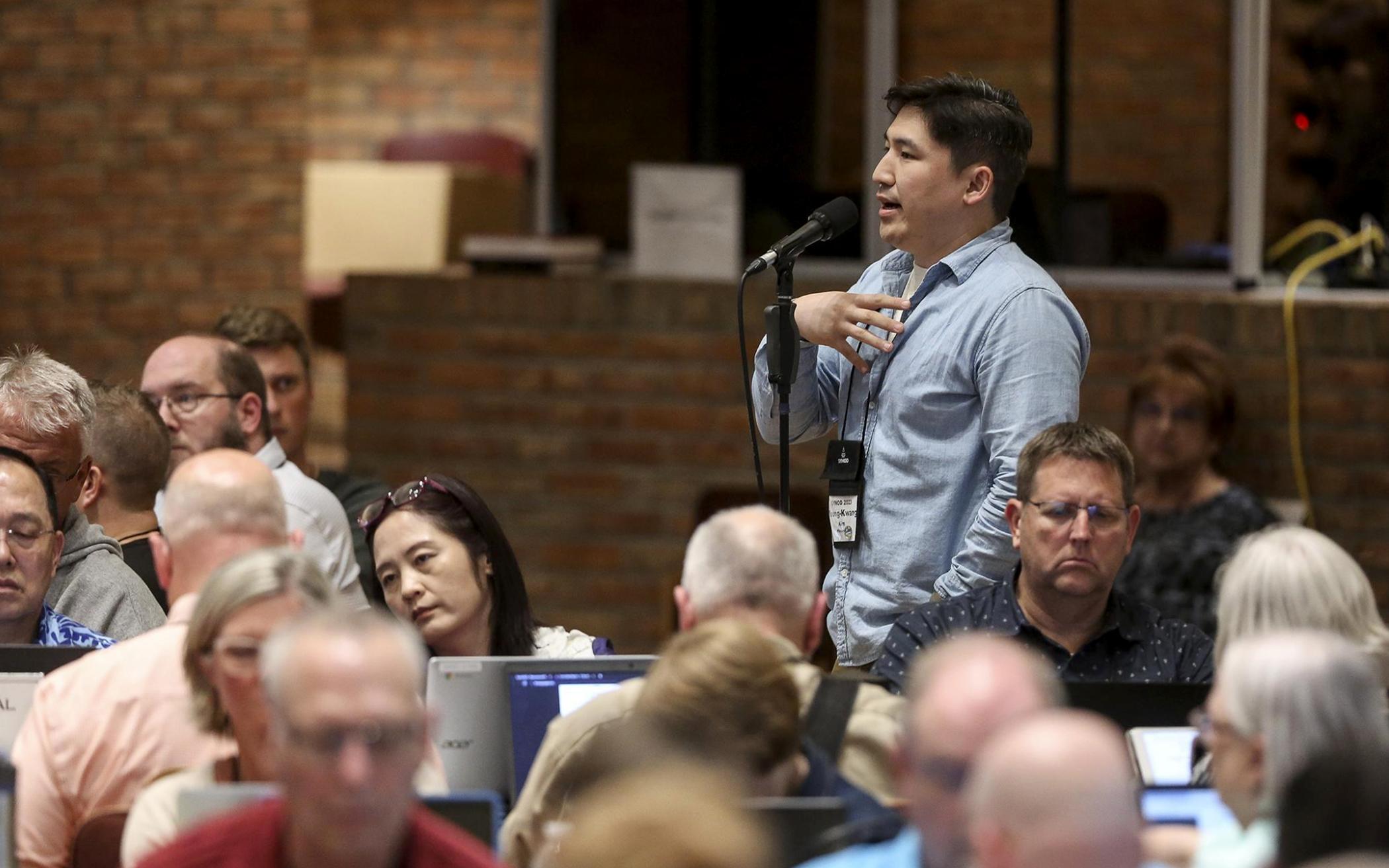
During these plenary sessions, your participation in the debates will differ from the way you participate in advisory committee deliberations. After an advisory committee makes a formal motion, delegates will be given the opportunity to discuss whether they agree with the proposal.
When you address the motion, your comments should clearly indicate whether you are for the motion or against the motion. There will be times when a delegate will want to review the history of how synod has treated such proposals. Other delegates might want to share a story about someone in their congregation who would have strong feelings about the subject that is being discussed. You might even be tempted to express your strong emotions about the topic. While these rabbit trails are understandable, they often act as distractions that take the focus away from what synod is trying to decide. When delegates clearly and succinctly state why they support (or oppose) the motion, they can help Synod move forward with the deliberations.
3. Don’t Get Bogged Down by Amendments.
There will be times when you hear a proposal, and you would like to see a slight change to that motion. Perhaps you don’t like the word choice. Maybe you think the motion needs to be clearer. It is possible you want to approve the motion, but you feel like it is lacking a key sentence.
The rules that govern the deliberation will allow you to make a “motion to amend.” You can request an alteration by replacing some words, striking some of the language, or adding some new language to clarify the proposal. If your motion to amend the proposal is supported, the delegates of synod will begin to debate whether they want to change the motion according to your recommendations.
Motions to amend serve a role at synod, but please use them carefully. Most of the recommendations before Synod have already been processed through multiple meetings, and to make substantial changes on the floor might have unintended consequences that have not been thoroughly considered.
Some delegates will propose amendments that lack clarity. They would like the language to be stronger, or they would like the report to offer thoughts that have not been included. Unclear amendments are unhelpful.
Some delegates will offer amendments that are overly complicated. These amendments might be multiple sentences. Such amendments might be entirely new motions that should be considered through an overture at a future synod.
Some delegates might offer a slight word change that could be helpful but does not really change the advisory committee’s proposal (sometimes called a “friendly” amendment). If the proposed amendment does not add substantial change, you might want to reconsider whether it is worth suggesting.
4. The Five-speech Rule
My last suggestion is to be wise about how often you speak on the floor of Synod. The “Five-speech Rule” is not meant to be a legal standard but a helpful suggestion. As a delegate, you have the right to speak to the motion at any time the chair will recognize you. However, there is a law of diminishing returns that applies to the speeches we make. You might find that some delegates make multiple passionate speeches to address the matters before synod. By the third day of deliberations, you might involuntarily start to tune them out.
To avoid having people tune out your words, please consider whether your thoughts need to be voiced on the floor of synod. Avoid repeating what other delegates have already said. Recognize that the more often you speak, the less your words will influence other delegates.
About the Author
Bill Sytsma has been a pastor in the Christian Reformed Church since 1998. He is currently serving at Palos Heights Christian Reformed Church in Palos Heights, Ill.