
The Banner has a subscription to republish articles from Religion News Service. This story by Tonny Onyulo, published Sept. 23, 2026 on religionnews.com, has been edited for length. The Banner added the final paragraph, with context for the Christian Reformed Church.
(RNS) — As killings and mass kidnappings intensify across Nigeria, Christian and Muslim leaders are building formal partnerships aimed at preventing the country’s security crisis from deepening religious divisions.
In August, Christian and Muslim leaders meeting in Abuja agreed to establish a coordinating group to develop community programs to counter hate speech and religious intolerance. They also signed agreements committing themselves to cooperation on conflict prevention and social harmony.
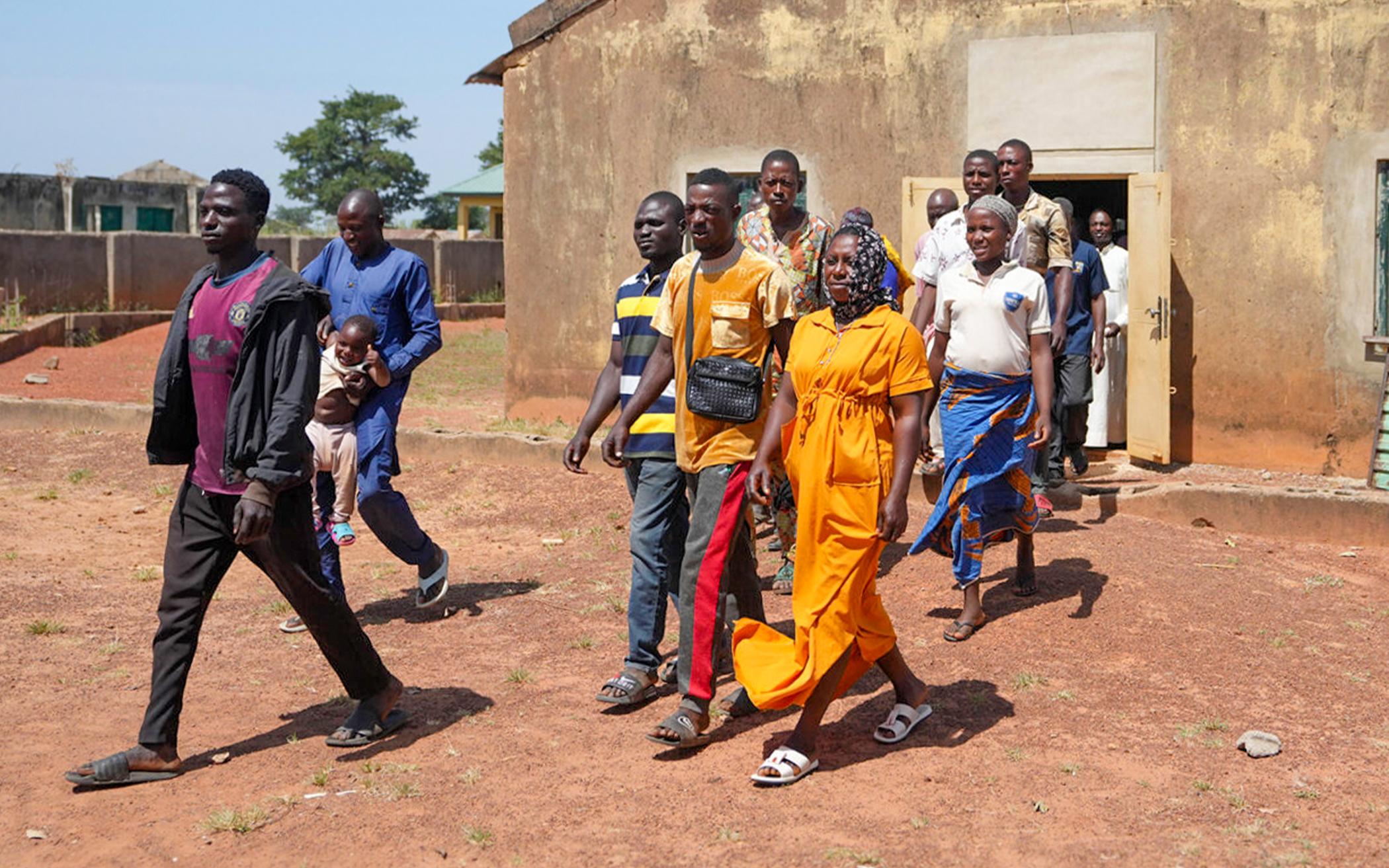
The initiatives come as Nigeria confronts another surge of violence affecting communities across religious lines. In one of the country’s largest recent mass abductions, an estimated 600 mostly Muslim Nigerians were kidnapped from around Dekera village in north-central Niger State in August, including worshippers targeted during Friday prayers. Thirty people were reported killed, and at least 2,000 residents fled across the border into neighboring Benin. Days later, Nigeria’s Catholic bishops issued a statement expressing solidarity with the Muslim victims.
“We stand in firm solidarity with our Muslim brothers and sisters in Niger State, and all over Nigeria,” the Catholic Bishops’ Conference of Nigeria said. “An attack on any place of worship is an attack on our collective humanity.”
The emerging interfaith response reflects the scale of a security crisis that has ravaged the country. Almost 7,900 people were abducted across Nigeria this past year, a 66% increase from the previous reporting cycle, according to SBM Intelligence, a Lagos-based geopolitical research firm. About 900 people were killed in kidnapping and related incidents, while confirmed ransom payments reached about $5.8 million.
The violence has complicated longstanding arguments over the role religion plays in Nigeria’s conflicts.
Emmanuel Ochefu, who leads a small Pentecostal church in Benue State, said Christians and Muslims must resist attempts to portray the country’s security crisis simply as a war between religions.
“God does not support in any way what is happening in the country,” Ochefu said.
Muslim religious leader Bashir Modu expressed a similar concern. He urged Nigerians not to associate violence committed by individuals with entire religious communities.
Modu said individuals who carry out terrorist acts in the name of Islam should not be seen as representing Muslims or the Islamic faith. The same applies to Christians.
At an international conference on diversity and social peace Aug. 11-12, participants committed themselves to dialogue and to a joint action plan bringing together government institutions, religious leaders, and civil society.
The cooperation has also extended to younger religious leaders. In early September, the Youth Wing of the Christian Association of Nigeria and the National Council of Muslim Youth Organizations signed a National Youth Peace Accord.
Earlier news: December Airstrikes in Nigeria Offer 'Fragile Hope' for Christians Long Under Attack (Jan. 16, 2026)
Nigeria’s conflicts are complex and vary significantly by region. The country faces insurgencies fought by the Boko Haram Muslim group, organized kidnapping and banditry, communal violence and disputes involving farmers and herders. Religious and ethnic identities sometimes overlap with conflicts over land, resources, and political power, complicating attempts to characterize the country’s violence as either wholly religious or wholly nonreligious.
The government of President Bola Tinubu has strongly rejected portrayals of Nigeria’s security crisis as a religious war.
Nigeria’s Catholic bishops, however, said government action must translate into security that Nigerians can experience in their daily lives.
Their statement called for proactive, intelligence-led security operations and prosecution of perpetrators and their sponsors, warning that “impunity fuels repetition.”
Included in the annual Open Doors World Watch List on the persecuted church for decades, Nigeria was seventh in the top 10 of most persecuted countries in 2026. The Christian Reformed Church in North America recognizes the international day of prayer for the persecuted church on the first two Sundays in November. ReFrame Ministries, the CRC’s media ministry, has resources for churches planning to participate.
c. 2026 Religion News Service
About the Author
Religion News Service is an independent, nonprofit and award-winning source of global news on religion, spirituality, culture and ethics.