
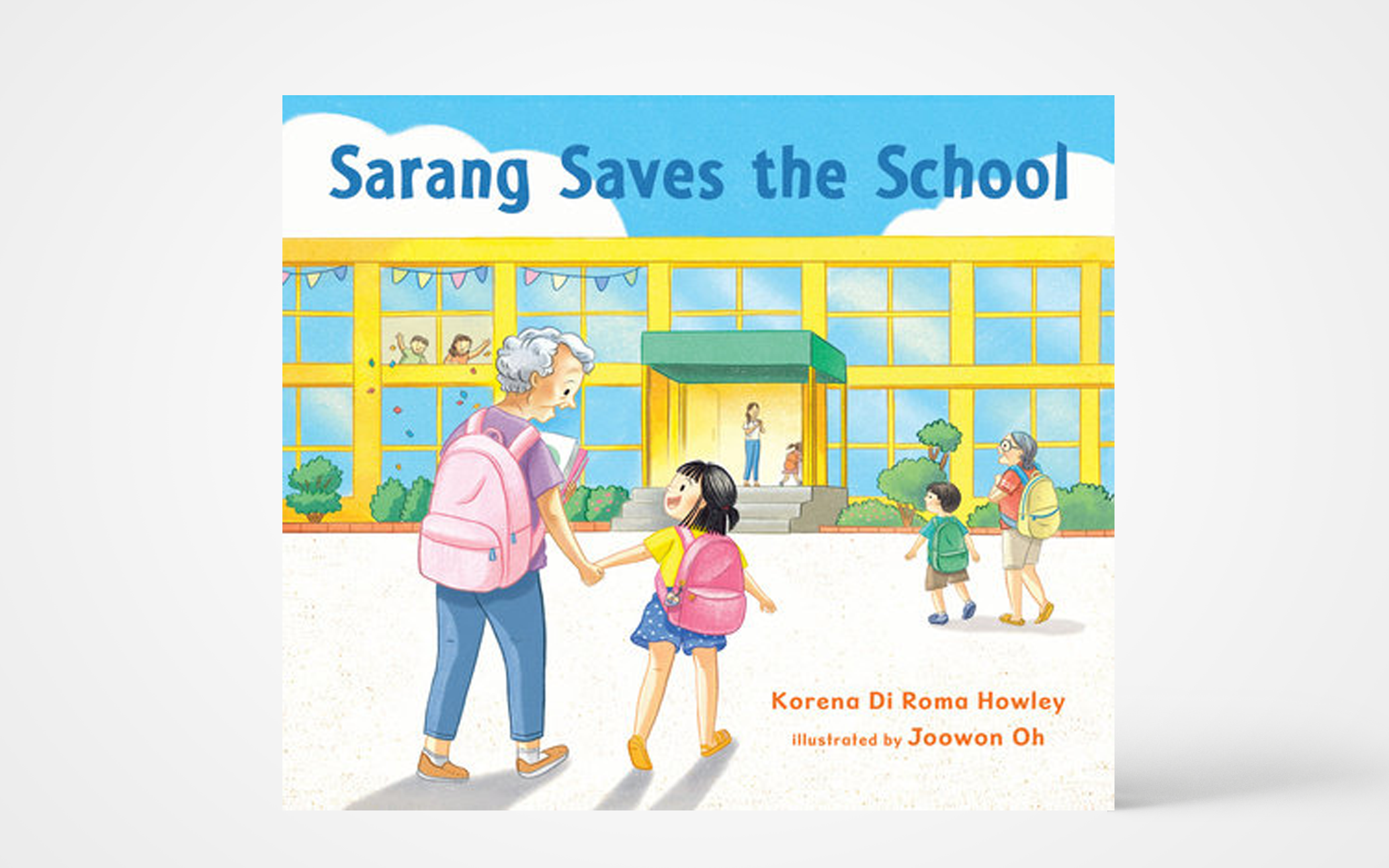
Sarang loves her Korean seaside village's elementary school. She’s not bothered by the small class size and unoccupied desks. With fewer students in the classroom, she’s able to ask more questions and receive additional attention from the teacher.
But when Sarang hears the village gossip that the school will be closing because there aren’t enough students, she is alarmed. She rushes to her parents’ restaurant and asks if the rumors are true. Appa, her father, and Eomma, her mother, explain that many people have left the village to find work in the city, and the school only needs a few more students, but no other children live in the village. Appa tells Sarang that even though the village is their home, they’ll have to leave if there is no school for her.
When Sarang sees Halmeoni, her grandmother, she asks her if she will move with them to the city if the school closes. Halmeoni explains that she won’t leave the village because it’s her home. Sarang asserts then that she doesn’t need to go to school, but Halmeoni insists that she must. She explains that when she was young, girls didn’t have the opportunity to go to school, so she never learned to read or write.
Now Sarang is doubly upset. Not only might the school be closed, but if it is, she will be separated from her beloved grandmother. Sarang thinks and thinks. Suddenly she has an idea. With hope in her heart, Sarang shares her plan with her peers and her parents, who talk to the school principal.
How Sarang saves her school is based on a true story of South Korean grandmothers enrolled in an elementary school and finally given the opportunity to have an education. In an author’s note, Korena Di Roma Howley writes, “Keeping rural schools open is important. Without schools, communities lose young families, and with them a sense of vitality and the ability to pass on local traditions. But the real-life grandmothers who signed up to attend school deserved to be there regardless of how many students were needed. They didn’t just save schools—they courageously reclaimed their right to an education.”
Joowon Oh’s sensitive illustrations blended with Korena Di Roma Howley’s inspiring narrative portray a girl’s love for her grandmother, her passion for her village, and her appreciation for education. Reading Sarang Saves the School with children could give parents and other adults the opportunity to talk about how many children in the world today, especially girls, still don’t receive the education they deserve, and what a tremendous gift God gives through teachers who inspire children to learn. (Candlewick)
About the Author
Sonya VanderVeen Feddema is a freelance writer and a member of Covenant CRC in St. Catharines, Ontario.