That’s not the man I know.
I remember thinking that after a prominent elder at our church was arrested for murdering his wife. When I was in high school, I had been a little hesitant to talk to someone so important. When the grisly details came to light, a secret life was exposed and a congregation was left heartbroken and confused.
I’ve logged almost three decades as a pastor, professor, licensed therapist, and consultant navigating issues of abuse, conflict, relational rupture, and character malformation—mostly in churches and Christian institutions. These realities grieve God’s heart (Ez. 34). I hear a familiar refrain whenever yet another scandal erupts: “That’s not the person I know. That was out of character.”
But this misses something fundamental about character: Character is not something we drift in and out of. Rather, character is who you are, revealed over time in the consistent habits of the heart and quietly rooted in choices that run deeper than the whims of circumstance.
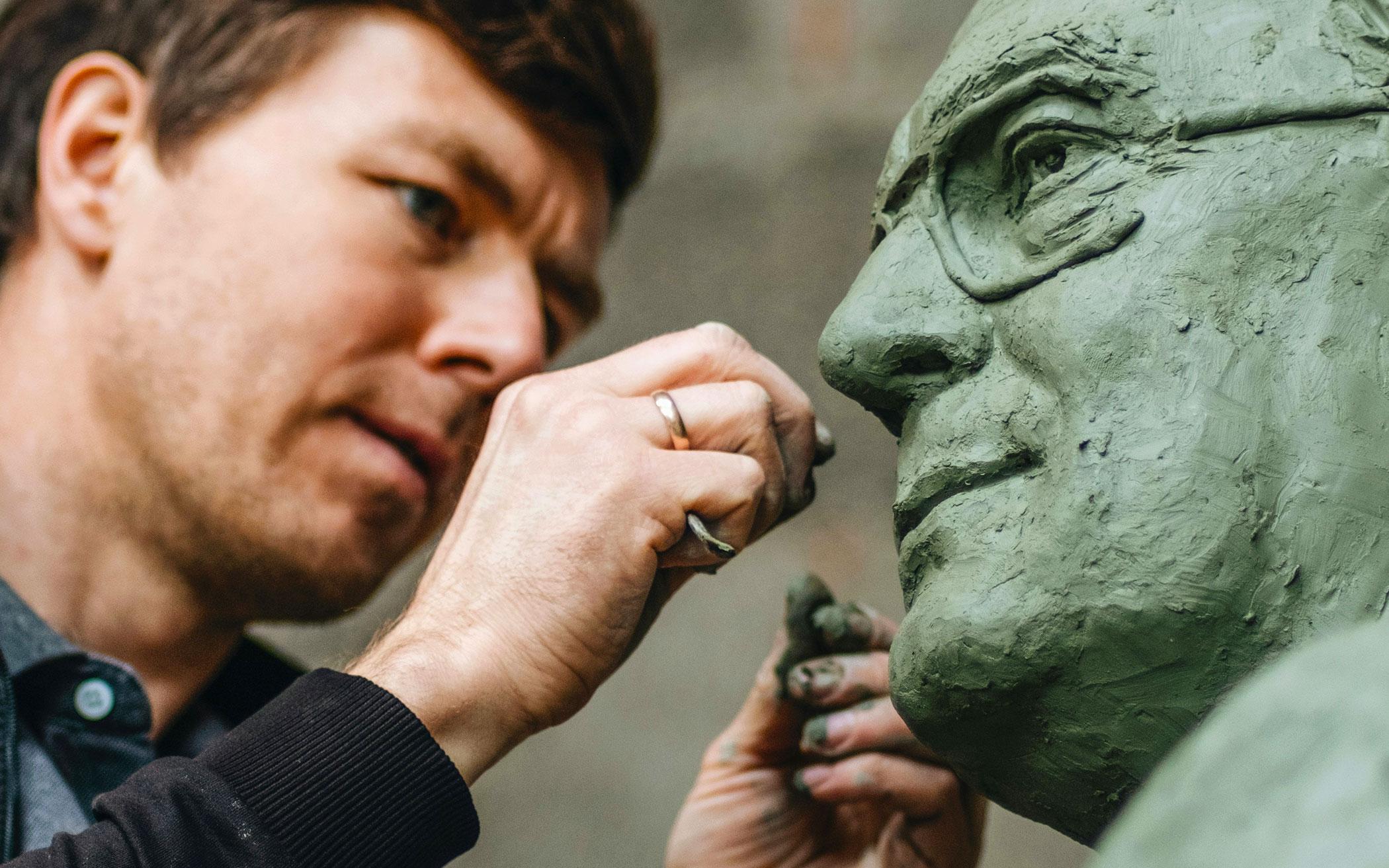
The word character comes from the Greek verb charassō (χαράσσω), a word that originally referred to the careful work of engraving or inscription. Imagine a sculptor carving an image into stone or a metalworker imprinting an image onto a coin. Imagine the deep and growing roots of a tree that sustain it over time, even amid life’s changing weather patterns (Jer. 17:7-8).
Unlike the word personality, which stems from persona (a theatrical mask) and often reflects how we show up—funny, shy, pensive, charming, bold, or sarcastic—character suggests something more enduring: the deep moral, relational, and affective grooves etched over time.
So what looks like a sudden failure is usually the fruit of a long, quiet formation—one that unfolded beneath the surface, unnoticed and unnamed. No, we do not put character on and take it off like a mask. We are shaped into it.
Formation Is Always Happening
Whether we intend it or not, formation is happening all the time. We are shaped within family systems, which hold sway long after we’ve left the nest. We are shaped within cultures and subcultures, which teach us (subtly or not-so-subtly) about what it means to be human, how to deal with pain, or what should be spoken or left unspoken. We are shaped by internal and external threats, by what we love and trust, our bodies habituating to postures of connection or self-protection. Our everyday dispositions have a story—one that dates back to our earliest moments.
Doug came to see me after everything fell apart.
He was the pastor of a small church—the kind where trust is personal and betrayal cuts deep. When it was discovered that Doug had been stealing cash from the weekly offerings for years, the shock rippled through the congregation.
This seemed so out of character—on the surface. Doug was relentlessly generous with his time. He showed up early, stayed late, visited the sick, helped people move, fixed what was broken. If someone needed help, Doug was usually the first one there.
But that visible version of Doug wasn’t the whole story.
Doug grew up in a home where money was never talked about but always felt. His parents worked long hours and were perpetually stretched thin. There was a constant, low-grade anxiety in the house—a sense that one unexpected expense could tip everything over. No one said this out loud, but Doug absorbed it in his body.
He learned early to be good, helpful, and low-maintenance. He learned to read the emotional temperature of the room and not add to the stress. Kindness became a way of staying safe.
But the anxiety never left.
By middle school, Doug discovered that taking small amounts of cash quieted the fear and gave him a sense of control in a world that felt precarious. What began as a coping strategy became a secret pattern—one he carried into adulthood.
This is where the language of “out of character” breaks down.
Doug didn’t suddenly become someone else when he stole from the church. He was living a divided life long before anyone noticed (James 1:8). On the outside, he appeared generous and faithful. On the inside, he was anxious, vigilant, and shaped by scarcity.
Stealing wasn’t a departure from his character. It was an expression of a character formed under chronic insecurity, a manifestation of a life forged in hiding and self-protection rather than trust and security.
That doesn’t excuse the harm. People were betrayed. Trust was broken. God’s character was misrepresented. Accountability mattered. But if we stop at moral outrage, we miss the deeper question: What kind of formation produces lives that look faithful on the outside but are driven by fear underneath?
Doug’s story is unsettling because it presses the question back onto us: Where are we living divided lives—competent, kind, and generous on the outside, but anxious and afraid within? And who are we becoming because of our inner divisions?
The Futility of Sin Management
Doug’s story makes something painfully clear: when we reduce sin to mere outward behavior, we miss the heart of the matter entirely.
We who claim to take sin seriously often pride ourselves on moral clarity. We name the rules, draw the boundaries, enforce accountability. We believe that if we can identify the wrong behavior and stop it, transformation will follow. But Doug’s story (and the biblical witness) reveals that behavior is often the symptom, not the core problem.
When we collapse sin into outward behavior, we settle for what Dallas Willard once called sin management—a shallow attempt to control outcomes without attending to the deeper work of transformation. It keeps us busy, but it rarely makes us whole.
Sin management focuses on outcomes: Don’t do this. Start doing that. Try harder. Set up safeguards. While these measures can be helpful, they are profoundly limited. They assume our primary problem is a failure of willpower or conviction. They rarely ask what fear, wound, or attachment pattern drives the behavior in the first place.
Doug didn’t steal merely because he had a deficient theology. Doug passed his ordination exams with flying colors, and his explicit theology was seemingly flawless.
Doug stole because anxiety and scarcity had shaped him long before he could name them. The behavior was wrong, but it made sense given the world his nervous system had learned to inhabit. He’d developed an implicit theology, one with an echo of Genesis 3—“I’m going to have to forge a life on my own.” This was the theology he was living.
This is why sin management so often fails. You can tweak a behavior in the short-term, but the heart’s habitual dispositions will eventually be revealed. You can play the public role, but what’s been shaped in secret quietly animates who you are and everything you do.
How Were You Shaped?
Long before you could articulate beliefs about God, you were learning how relationships work. You were discovering whether closeness was safe, whether needs were welcome, whether mistakes led to repair or rupture. These experiences shaped your nervous system—your expectations about connection, conflict, and care. And these experiences formed your habits and dispositions—your way of being in the world.
Calvin University professor James K.A. Smith’s work on character formation echoes this. He notes that character is “the web of dispositions you’ve acquired that work as automaticities, disposing you to act in certain ways” (You Are What You Love). I’d add that these so-called “automaticities” are reflexive responses of the human nervous system. But on the surface, that’s not what we see.
Sarah learned that love came through achievement in her home. Her father rejoiced at A’s on tests and trophies at the end of sporting events, but ignored her tears. She learned to bury sadness, confusion, and shame.
After attending college and getting married, Sarah settled into part-time work at a Christian publisher and began having children. But that nagging sense that she wasn’t doing enough or performing well followed her. Other moms seemed to handle stress better. Other wives seemed to balance their many tasks more easily.
Sarah didn’t suffer a scandal, like Doug. The quiet formation of her character left its own divide within, however. On the outside, she was bubbly and personable. On the inside, she navigated a never-ending ache, a sense of impending doom. She’d go from doctor to doctor looking for medical answers. Not even her husband was attuned to her silent suffering.
The work of character re-formation is not just the work of addressing what is seen. More fundamentally, it addresses what is unseen.
Many Christian environments reward performance far more than presence. We celebrate certainty, productivity, and confidence. We rarely slow down enough to ask what these traits are protecting us from.
Performative faith looks faithful on the outside but is often driven by fear on the inside—fear of being exposed, fear of being irrelevant, fear of being abandoned, fear of failure. Over time, this performance disconnects us from ourselves and from God. We become managers of image rather than people of integrity.
Integrity, after all, comes from the word integer—wholeness. Not perfection. But an inner cohesion. It’s the wholeness Jesus envisions when he says, “Blessed are the pure (katharos) in heart” (Matt. 5:8).
A person of character is not someone without struggle. It’s someone who is no longer split between who they appear to be and who they actually are, echoing God’s promise: "I will give them an undivided heart and put a new spirit in them; I will remove from them their heart of stone and give them a heart of flesh” (Ez. 11:19).
From Fixing to Being Found, in Christ
Much of Christian formation has been built around fixing—fixing sin, fixing behavior, fixing leaders. It’s what we’ve known since we grasped for the fruit in Eden, fleeing the scene and sewing fig leaves of self-protection. It’s an exhausting pursuit that we’re ultimately only relieved of when we realize we no longer need to hide, but we’re “hidden with Christ in God” (Col. 3:3).
In their own time, Doug and Sarah each found their way to me for a five-day soul care intensive. Their stories brought sadness, not because they came from tragically broken homes or abusive situations, but because they described their families as ordinary, normal, Christian.
Our work was not to target their parents as bad—most of us are doing the best we can. Rather, the work was to grow in curiosity about their formation. They began to see the subtle movements of their hearts and formation of their habits, even in their earliest years. In time, Doug and Sarah experienced a growing “truth in the inmost being” (Ps. 51:6), an unfolding story that not only needed to be told, but held with grace and tenderness. Slowly, with care, they were living into a new story, with growing integrity, maturity, and wholeness.
Can we cultivate the kinds of honest spaces where these stories can be seen, heard, and told? Can we create room for each other, even for truth in the depths of our being? It’s challenging when it seems that performance and posturing are more encouraged, not least through social media. It’s challenging when definitions of faithfulness prize only outward manifestations and don’t consider the habits of the heart.
Jesus rarely confronted failure the way we do. Rarely did he begin with exposure or explanation, but instead with presence and parables to invite a new way of imagining life. When he encountered divided lives—religious leaders skilled at performance, disciples full of bravado and fear, women hiding in shame, men protecting themselves with self-certainty—he did not reduce them to their behavior. He often spoke directly to the heart beneath it.
Again and again, Jesus’ first move isn’t in the direction of mere behavioral modification but heart transformation:
“Who are you looking for?”
“What do you want me to do for you?”
“Do you want to be made well?”
Jesus relieves us of the exhausting pursuit of security, worth, belonging, or satisfaction on our own.
Jesus was not interested in creating better-managed selves. He came to heal divided ones. He named hypocrisy not as moral failure alone, but as a life split between outer righteousness and inner fear. His harshest words were reserved not for those who struggled, but for those who refused to see their own division.
At the same time, Jesus was endlessly patient with those willing to tell the truth about their inner world. He met Zacchaeus not with condemnation but with presence—and restitution followed. He met Peter not with disqualification but with a fire, a meal, and a question about love. He met the woman at the well not with a lecture, but with a conversation that named her story without shaming it.
This is the way of character formation Jesus models: not fixing from the outside in, but healing from the inside out. Not fear-driven performance, but love that reorders the heart. Not sin management, but transformation that emerges as we are seen, known, held, and forgiven.
The question before us, then, is not simply: What have we done wrong? It is: Who are we becoming?
Character is not formed by pretending, posturing, or perfecting. It is formed as we bring our whole selves—fear, longing, failure, and hope—into the light of Christ’s attentive, healing love. And in that light, slowly and sometimes painfully, divided lives begin to come together.
It won’t be easy. But it will be holy.
About the Author
Chuck DeGroat, professor of pastoral care and counseling at Western Theological Seminary in Holland, Mich., is the author of When Narcissism Comes to Church and Healing What’s Within. The basis of this article was his work in his upcoming book, Who You’re Becoming: The Slow and Courageous Work of Character Change in a Narcissistic Age (Tyndale).