
This spring, I had the opportunity to visit Spain for two weeks. Even though I didn't go to Barcelona or even the region of Catalunya, more than one conversation during my trip was about the long-awaited opening of the city's La Sagrada Familia cathedral, the building of which has been over 100 years in the making, and about its remarkable original architect, Antoni Gaudí.
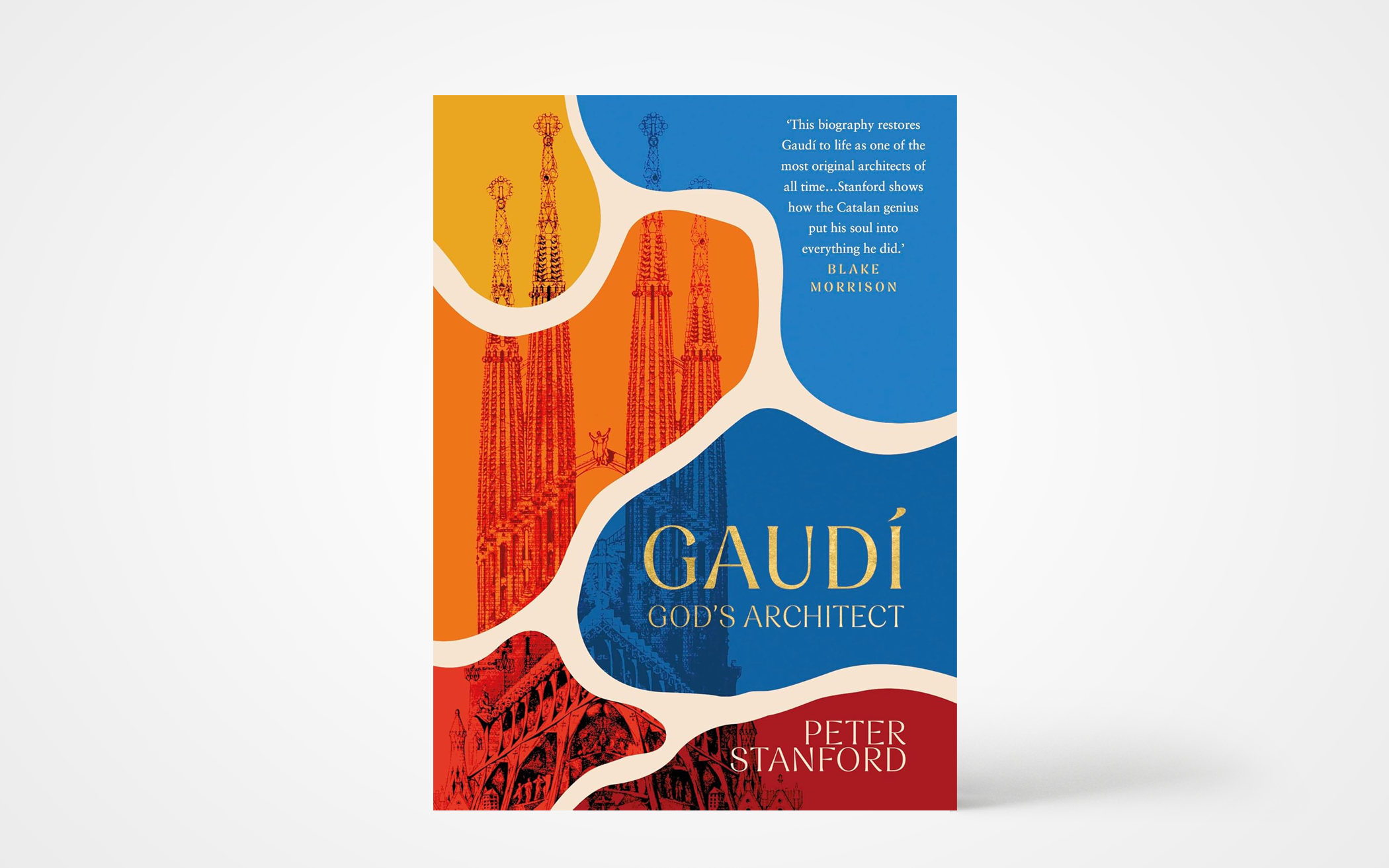
The cathedral blessed and inaugurated its tallest tower June 10, marking 100 years after Gaudí’s death. But it’s not just his most famous cathedral that’s commemorating the occasion. British journalist Peter Stanford published a biography of Gaudí last week with John Murray Press, titled Gaudí: God’s Architect.
Stanford opens by telling the story of Gaudí’s remarkable death. What seems like it should spoil the ending is instead a perfect hook into the story. I couldn’t wait to learn more about this genius, the life that led up to such a death, and how Gaudí’s legacy has sustained itself in the century since.
Stanford gives readers a solid portrait of Gaudí in his full complexity, while also consistently returning to the building project that came to dominate the final years of his life. Nods to La Sagrada Familia are everywhere throughout this book. From the twisted trees of his rural hometown to the scratched plaster on his childhood home’s walls, Stanford draws connecting lines through Gaudí’s early life and long career all the way to his magnum opus.
When immersed in the pages describing Gaudí’s artistic genius and its ties to his fervent Catholic faith, I got the sense God’s Architect is a fitting subtitle for the book. However, Stanford is writing more than a hagiography. He includes how the architect, not often seen as image-conscious, might have curated the few details that exist about his early life to present a public identity that was consistent with his ideal of rural life. When it comes to Gaudí’s devout Catholicism, Stanford shows how faith inspired and moved Gaudí, but also made him bound to a stubborn piety that almost cost him his life on at least one occasion.
Gaudí’s own mystical sensibilities are enhanced by the awareness that he would never live to see the completion of his life’s greatest work. In sections where Stanford quotes current architects on the project, he conveys exactly what kind of visionary Gaudí was: teams of people have trouble recreating one man’s century-old designs in the modern day, even with advanced computer equipment.
Like the question mark hanging over La Sagrada Familia’s true final completion date, after reading God’s Architect, I was left with as many points of curiosity as had initially drawn me in. Will the finished work live up to the dreams of the architect who masterminded it? How could I balance my admiration for Gaudí with lessons learned from his stubbornness? I might just have to visit his last cathedral looking for answers. (John Murray Press)
About the Author
Ethan Meyers is from Holland, Mich., and currently lives in Washington, D.C. He is an editorial assistant at Sojourners magazine.