
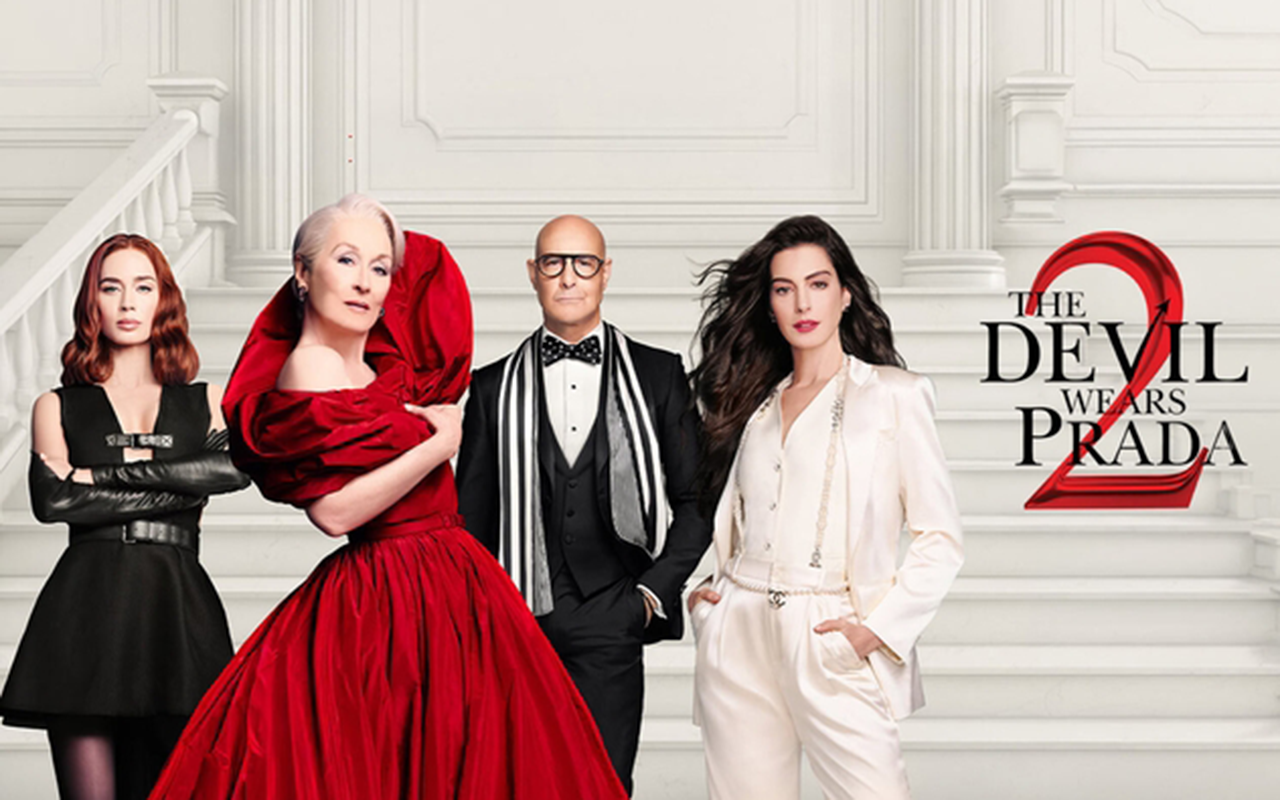
If you loved The Devil Wears Prada, you will probably relish the sequel, if only to be reunited with the Fab Four from the first movie: Miranda, Andy, Emily, and Nigel—Meryl Streep, Anne Hathaway, Emily Blunt, and Stanley Tucci.
It’s great fun to catch up with their characters 20 years after we left them, when fashion magazines still dictated what people wore on and off the runway. In 2026, things have changed drastically for magazines of all kinds. As I watched this movie, I surprised myself with the thought that The Banner and Runway, the fictional high-fashion magazine at the heart of the first and second “Prada” movies, have more in common than I would have guessed.
Both publications are grappling with how to stay relevant in an age where people can get their news in little sound bites from Tik Tok creators, and when many people prefer to listen to influencers over editors. Both magazines are competing for ad revenue amid declining print media.
The content in each magazine might be wildly different, but all magazine people are trying to engage with their readers, something easier said than done in this current era. This movie makes sharp observations about the state of modern media.
For the luminous Anne Hathaway’s character, Andy, she just wants to be a real journalist covering important stories. When she gets unceremoniously fired via text moments before accepting a journalism award, she must find new work and fast. An opportune phone call lands her back where it all began for her, at Runway magazine, where she was once the underling to the underling of the fabled and terrifying editor-in-chief, Streep’s stone-cold Miranda Priestly.
Even though the dynamics have changed—Andy is now, after all, features editor of Runway—she still longs for Miranda’s approval. I was rooting for her even as the older, wiser me wanted to tell her to know her own worth and stop throwing pearls before swine, albeit a “swine” wearing Dolce Gabbana.
The two old foes must now team up to face a bigger threat: the takeover of the magazine by people who don’t get it or appreciate it. For Miranda, this is quietly devastating. She has poured her whole identity into her work, which she genuinely loves. Who is she without being an arbiter of style to her readers?
Though she is rich and famous (and famously mean), Miranda’s grief is relatable. In a fallen world, even believers can build their houses on the sand, only to find it all gets washed away.
It might be tempting to say that the movie’s focus—on fashion—is vapid and not important. I disagree. Fashion can be enormously creative and a way to glorify God in “every square inch,” as Abraham Kuyper famously said. The Bible’s Tabitha (Acts 9) made beautiful clothes for widows, for example. Lydia (Acts 16) was a wealthy vendor (in today’s vernacular) of luxury purple cloth. Fashion has its place in our society and in every society that ever existed. What we wear matters. Beauty and design matter.
Though at times the characters in this movie are impossibly fabulous (strutting around Milan together like synchronized swimmers in designer apparel), their human frailties are obvious, too. Maybe the saddest character is Emily Blunt’s Emily, who seems to think that rising to the top (at the expense of everyone else) will save her, when we all know it won’t.
Streep could imbue humanity into a serial killer character, so it's no surprise that she conveys Miranda’s vulnerability and grief in a way that makes one want to root for her, too. This devil might wear Prada, but even she is in need of redemption and grace, as we all are. Even she must build her house on solid rock or risk having it all washed away. (Rated PG-13 for brief strong language and suggestive references)
About the Author
Lorilee Craker, a native of Winnipeg, Man., lives in Grand Rapids, Mich. The author of 16 books, she is the Mixed Media editor of The Banner. Her latest book is called Eat Like a Heroine: Nourish and Flourish With Bookish Stars From Anne of Green Gables to Zora Neale Hurston.