
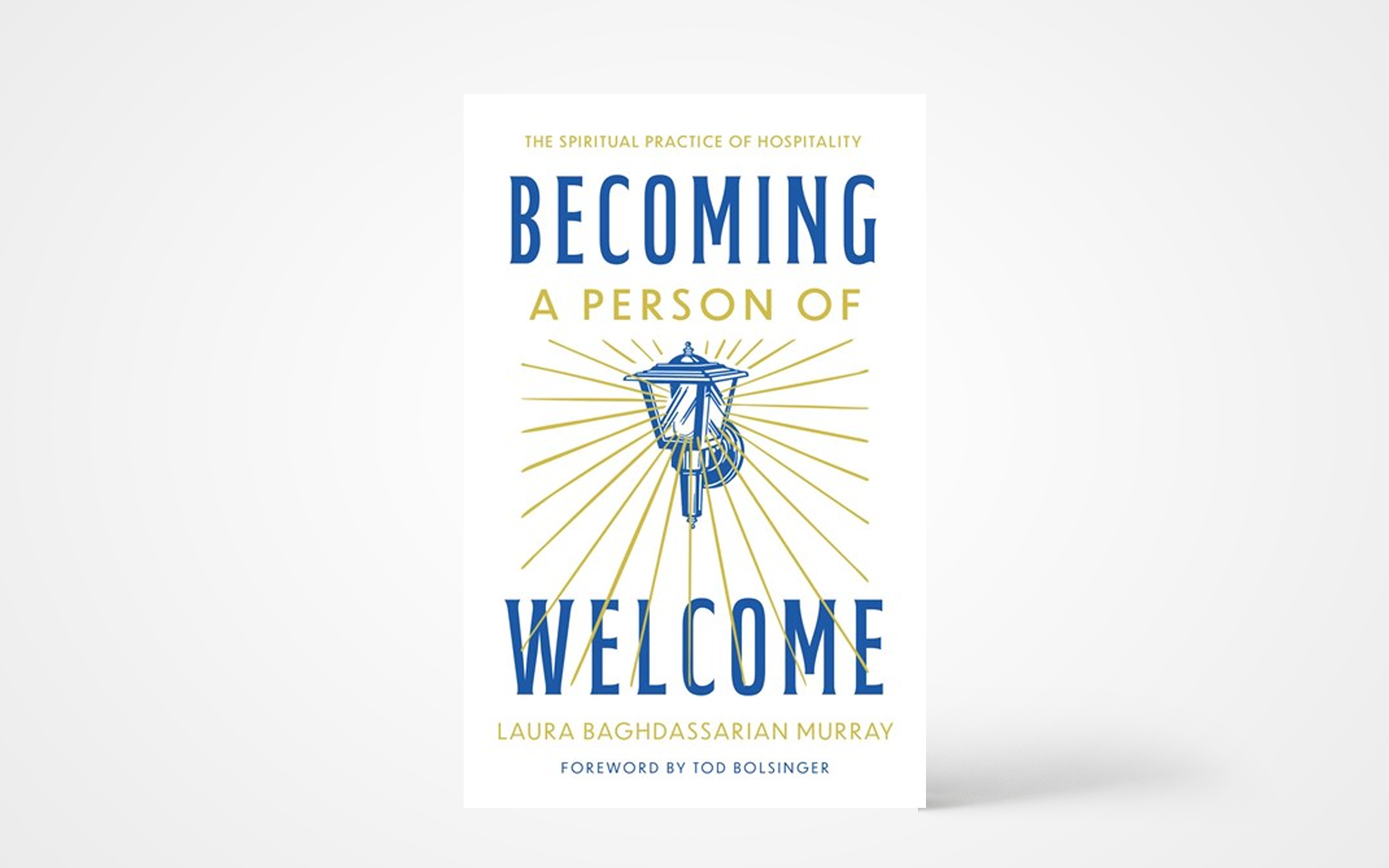
For those who want to go deeper into the spiritual practice of hospitality, this loving book holds a gentle invitation to go beyond entertaining to cultivating a posture of welcome, at home and out and about.
Spiritual director Laura Baghdassarian Murray draws on the hospitality of her Armenian culture and many years of church leadership to create a picture of what it means to be a person of welcome.
She tells readers about her favorite coffee shop, run by Australian brothers in her Texas community. With no wifi or cushy furniture, the coffee shop might not seem welcoming at first, but the brothers’ vision is clear: The purpose is finding “respite in your day.”
“They bring hospitality through making good coffee, knowing their guests, keeping their vision clear and being purposeful in their boundaries and care,” Baghdassarian Murray writes. The duo bring clarity to those who visit their premises, something that is crucial for good hospitality.
Why clarity? Guests need it to thrive, says the author, who wrote her doctoral dissertation on hospitality. During her research, she asked interviewees, "What helps you to be a good guest?”
“Eight out of 10 people answered by citing clear expectations of time and space. They wanted to know which bedroom was theirs, what food they could eat, and when the hosts were expecting meals together,” she writes. “When asked why this was important, they each said that clarity of expectations and guidelines as guests decreased their anxiety about where they could and couldn’t go, what they could use, and what was set apart for them.”
As someone who has hosted 24 international students in my home over the years, I found this fascinating and true, and I vowed to be even clearer with our current and future host sons and daughters.
Whether one hosts someone for an evening or for the entire school year, it can be easy to worry that one’s space is inadequate and therefore disqualifies them from inviting people over. Baghdassarian Murray cites her own “horrible flooring” at her house, and I will admit to having qualms about a horrible sink in our downstairs bathroom. But in the end, hospitality is not about those things but about the people we are caring for in our spaces.
“Each of us can be people of welcome, wherever we host,” she writes. “It takes practice to regularly release our own demands and artificial boundaries, and to cultivate a posture of hospitality that extends warmth, welcome, and care to others.”
Hospitality is also portable. “It shows up when our eyes have been trained to see the loneliness of another and show friendship,” she writes. “We are restoring a part of their humanity that may have been broken. We offer healing to their inner wounds of invisibility when they have long felt unseen.”
If we are in line at the pharmacy and sense the fatigue of the people around us, or we are driving our international student to school way too early in the morning because he missed the bus (which happened to me today), we might feel burdened in the moment (I did), but God gives us what we need to show his generosity and welcome to those he sends our way.
“Hospitality comes from people, not just places,” she writes. “It is a practice that becomes a posture, which we carry wherever we go.” This warm and wise book inspires, elevates, and equips readers to open their homes in a deeper way as they open their hearts to what the God of welcome would do in their lives. (IVP)
About the Author
Lorilee Craker, a native of Winnipeg, Man., lives in Grand Rapids, Mich. The author of 16 books, she is the Mixed Media editor of The Banner. Her latest book is called Eat Like a Heroine: Nourish and Flourish With Bookish Stars From Anne of Green Gables to Zora Neale Hurston.