
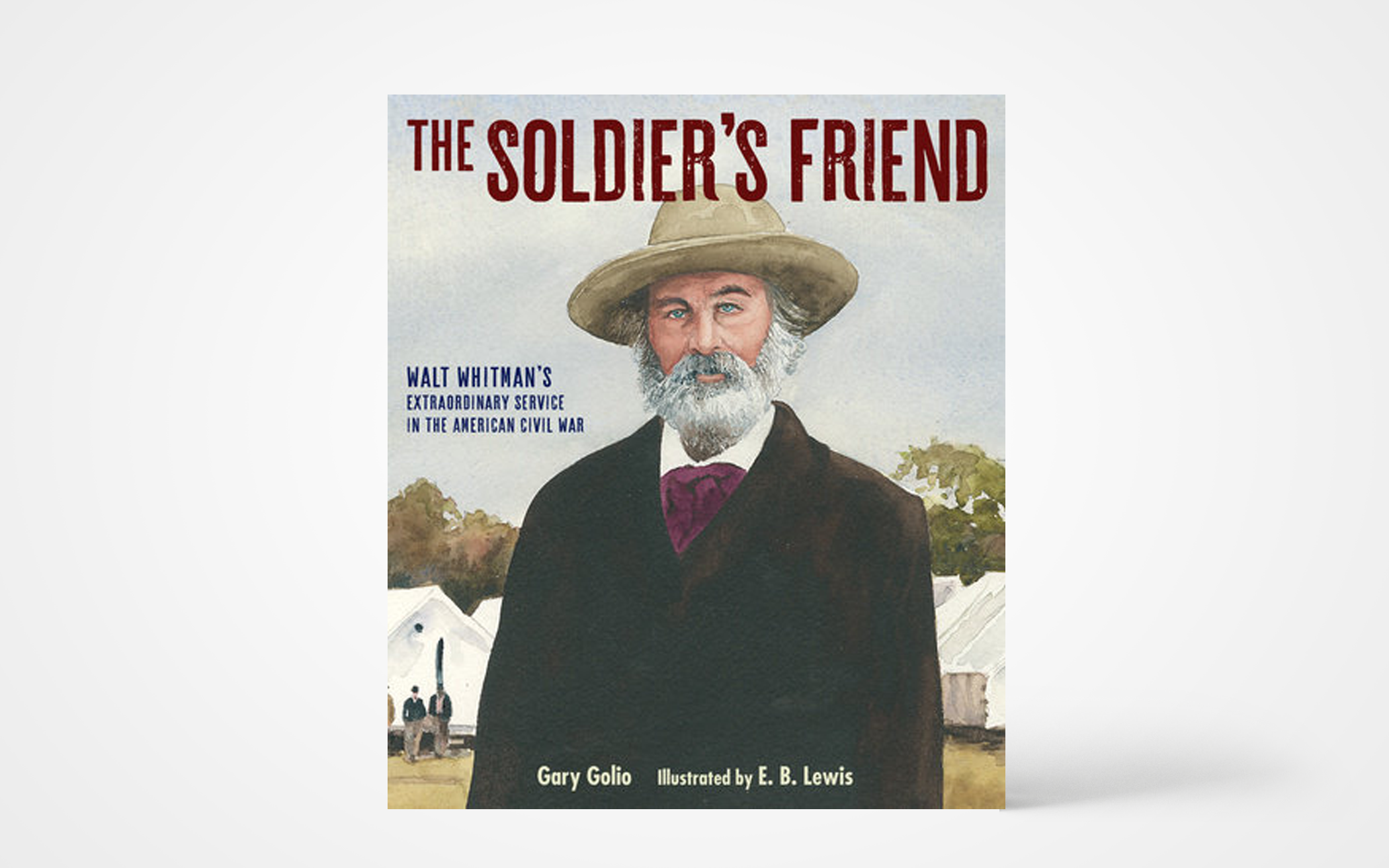
In December 1862, Walt Whitman left his home in Brooklyn, N.Y., and went in search of his injured brother, a Union soldier fighting in the South in the Civil War. Nothing could have prepared Whitman for the devastation of human life and property he witnessed by the time he found his brother in a hospital camp in Virginia.
Walt was deeply distraught by what was happening to his beloved country—“War was raging. Brother fighting brother. North fighting South. The country—the Union—was breaking apart, and Walt felt like he was, too.”
Though Whitman was a poet, he could hardly find the words to describe the carnage and death all around him. Sensitive and compassionate, Walt was soon enlisted to assist in the camp in any way he could—writing letters for those who were unable to and helping to bury the dead.
When some army doctors saw how competently Walt aided the injured and dying, they put him in charge of wounded soldiers being transported to Washington, D.C. When Walt arrived there, he found a job, but spent his afternoons visiting soldiers in the hospitals, often bringing small gifts that had been given to him by friends who knew about his work of mercy.
While with the soldiers, “Walt looked beyond the wounds and sickness to the person inside the body. He met their eyes with his, touched or held their hands, and read to them even if they seemed not to hear. ... In his mind, they were still strong and healthy, and could have been the sons he’d never had.”
In an author note, Gary Golio writes that many soldiers who had interacted with Walt and survived the war wrote him thankful letters and credited him with providing hope that kept them alive. Golio adds, “And while it is believed that Walt may have visited nearly twenty-five thousand soldiers during his time in Washington, that number is less important than the size of Walt’s heart. ... Walt’s story of service during the Civil War is a story of what one person can do.”
Exquisitely illustrated by renowned artist E. B. Lewis, The Soldier’s Friend is a testimony to the impact sacrificial love and compassion can have during tumultuous times. Though recommended for children ages 7-10, the book is better suited to ages 10 and older because of its depiction of the destruction caused by war.
(Calkins Creek)
About the Author
Sonya VanderVeen Feddema is a freelance writer and a member of Covenant CRC in St. Catharines, Ontario.