
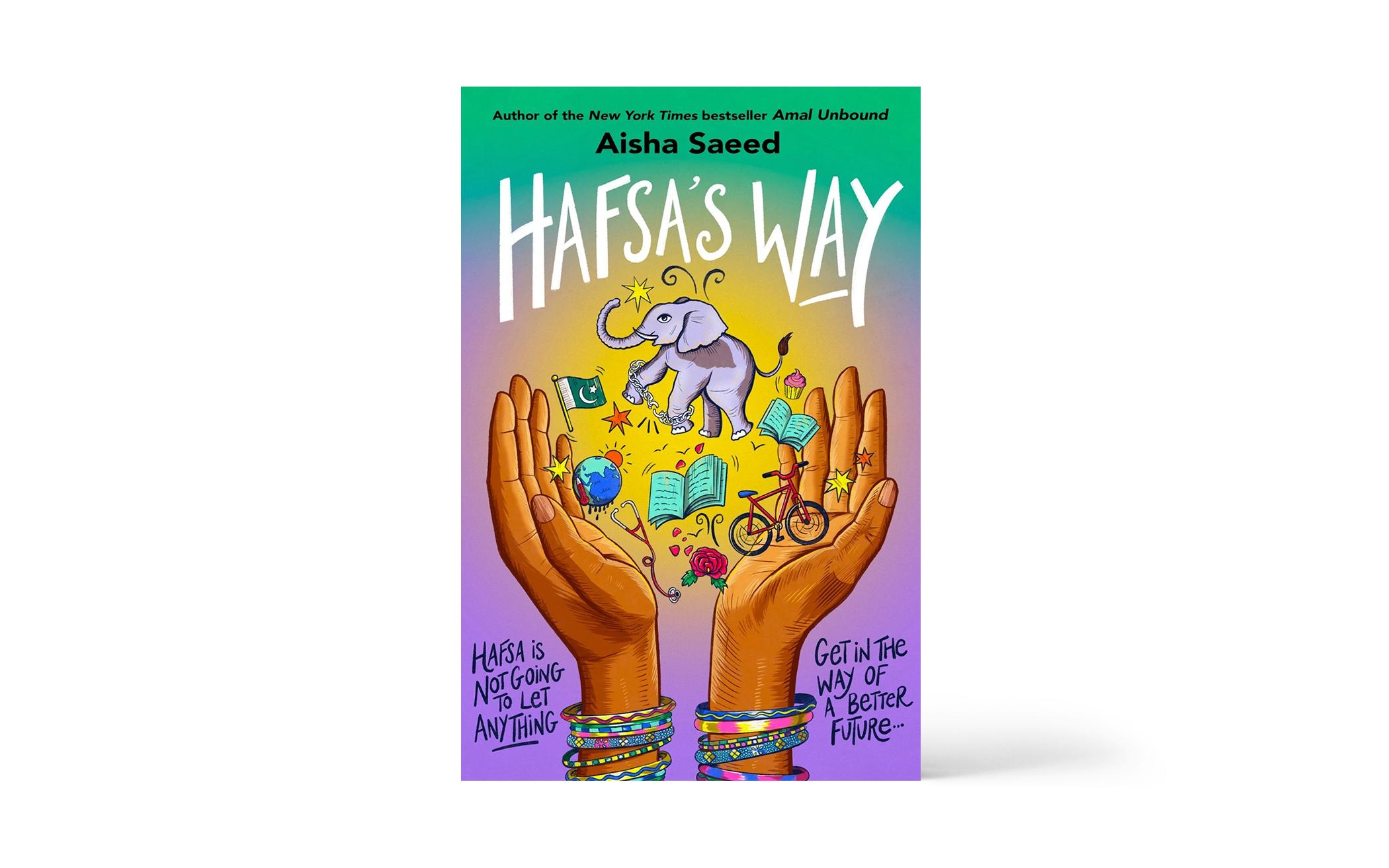
Hafsa Imtiaz is impatient to realize her dream of becoming a doctor when she’s an adult, so, without her parents’ knowledge, she applies to the Bukhari Summer Science Camp in Lahore, Pakistan, a distance away from the village in which she lives. When she’s accepted at the camp, Hafsa is afraid her parents will deny her the opportunity to go to the big city and live in a dorm for the four weeks of the camp because of the expense and because that would be too dangerous for a girl. Hafsa remembers how she had to fight for the opportunity to ride a bicycle, an activity that was frowned upon for girls in her village. Getting permission to go to camp will be much harder to achieve.
Though Abu, Hafsa’s father, initially refuses to let her attend the camp, he doesn’t want to lose face when his wealthy son-in-law, a doctor living in Lahore and married to Hafsa’s sister, offers to pay for the camp and invites Hafsa to stay with him, her sister, and his extended family.
Hafsa is elated! She thinks the camp will go smoothly and she’ll gain much medical knowledge to set her on the path to becoming a doctor. However, her hopes are crushed when she realizes she didn’t register in the medical camp, as she had assumed, but in one dealing with climate change. Also, being the only student attending the class who doesn’t live in the dorm, Hafsa feels like an outsider. Everything is different in Lahore, and soon Hafsa feels like a “backward village girl.” The mockery of some classmates exacerbates her sense of isolation and dismay.
But when Hafsa and her classmates take a day trip to a poorly maintained zoo, she encounters an elephant named Gupta, a meeting that changes everything for Hafsa. Here is a creature who needs help, and Hafsa knows she must do all in her power to advocate for Gupta. But what can she do? And who will help her? And how might the black-and-white way she perceives the world fail to ring true to reality? How must her thinking change?
In an author note, Aisha Saeed explains that the story of Hafsa’s activism for Gupta was inspired by the true story of an orphaned Asian elephant named Kaavan who was given a better future after living in captivity.
This novel for children ages 10 to 12 offers insights into the life of a girl growing up in a Pakistani village, the obstacles girls face in that cultural context, the impact of climate change on agricultural practices in that part of the world, and small steps kids can take to bring about positive change.
(Nancy Paulsen Books)
About the Author
Sonya VanderVeen Feddema is a freelance writer and a member of Covenant CRC in St. Catharines, Ontario.