
Don’t forget Ukraine.
Four years ago today, on Feb. 24, 2022, Russian forces invaded Ukraine, causing an estimated 15,000 civilian deaths over that time and maiming and traumatizing untold other human beings.
This invasion was and is more than abstract to me. My dad was born in Zagradovka, a Mennonite village near Kherson in Southern Ukraine. I grew up with the stories of how he and his family fled Stalin in 1943, my grandparents having already buried two children due to starvation. My dad was 6 years old, a child refugee and displaced person.
When Russia invaded Ukraine, I could hardly believe it. The one comfort we always had was that it could never happen again. And then it did.
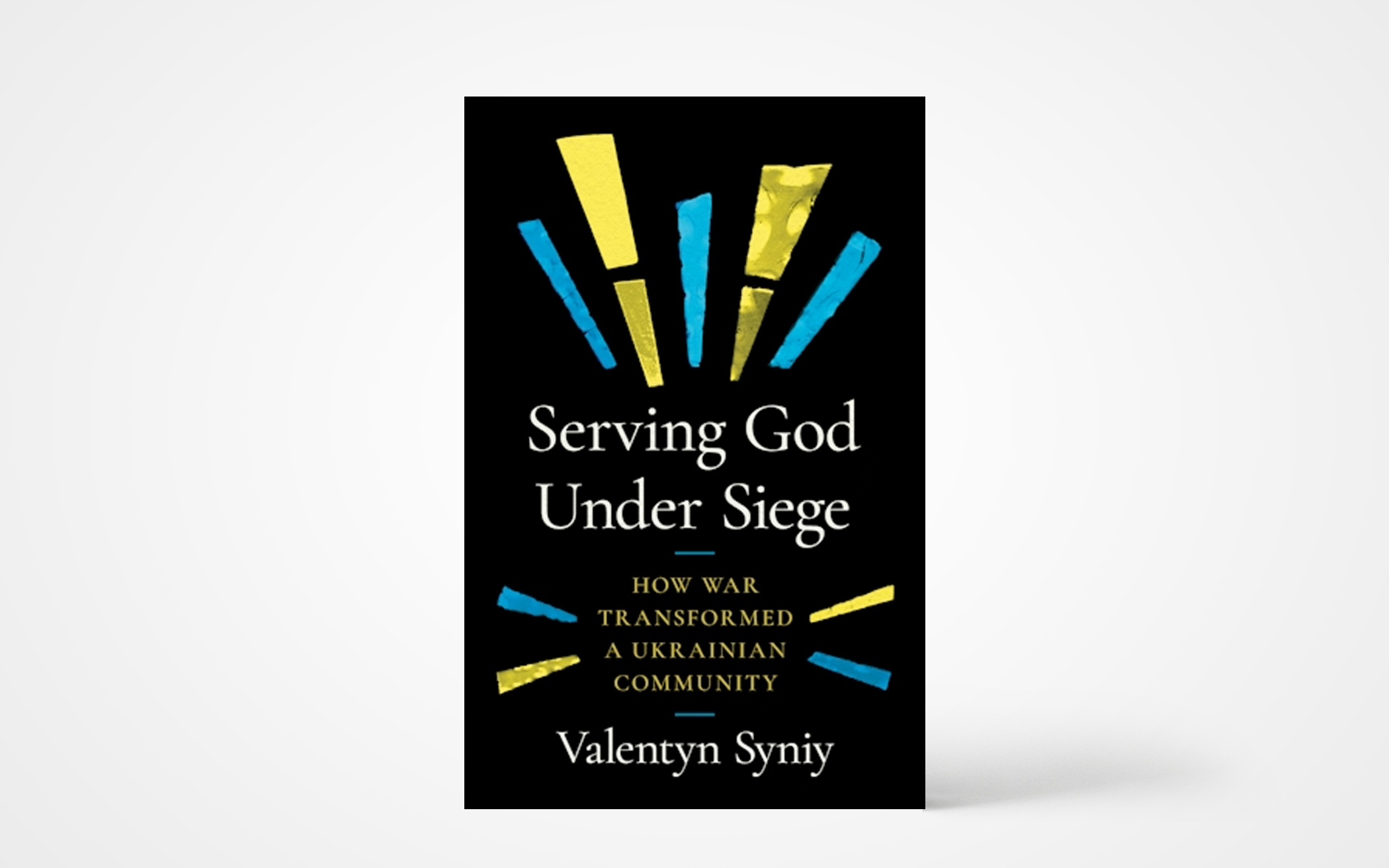
I was keenly interested, then, in the memoir of Ukrainian pastor and seminary director Valentyn Syniy, who writes about his experiences enduring a now-prolonged war in his beloved homeland.
The book opens as the “smell of war” is beginning to waft in the direction of Syniy and his seminary, the Tavriski Christian Institute.
Syniy, with the help of an American military veteran with tactical experience, begins to prepare for the eventuality of war, despite the people around him who thought he was being fearful and overreacting. That preparation proved to be a big advantage for him and the people he was helping evacuate from the southern steppes to Western Ukraine.
Getting people to safety without reliable vehicles and a severe shortage of gas proved hard enough, but then came practical matters. Where would people live? What would they eat? How would they get their prescription medications such as insulin? One couldn’t just go to an ATM and withdraw money anymore, either.
Syniy fled with his family and his dog, Sherri, but many people had to leave their pets behind because places that housed refugees could not take them. They had to be left behind, which is something my dad also recalled with heartache for the rest of his life.
For Syniy, news from Kherson was grim: There was looting and wanton destruction of property, including at TCI. There were rumors that the Russian soldiers had set up a mobile crematorium on their campus as people smelled the stench of dead bodies coming from there.
“You are incapable of stopping the raging evil,” said Syniy, who felt helpless and demoralized, yet plunged himself into humanitarian aid in his new location.
People left behind in Kherson, including Syniy’s father, reported hunger and fears of a famine in the agriculturally rich area, where fruit trees grew in abundance and the honey once flowed (my Opa kept bees and my dad never forgot the apricots and peaches that grew in his childhood home).
Syniy grew discouraged when some Russian believers he had worked with through the seminary began to minimize the destruction and killings going on in Ukraine. They spouted the party line of Putin’s Kremlin, which was “one language, one culture, one historical space.” This meant that Russian forces were trying to eradicate Ukrainian language, culture, and homeland in an attempt to “Russify” everyone and everything. Syniy questions whether his former ministry partners were “obeying the Kremlin over obeying God.” They seemed to be drinking the KoolAid their leaders were pouring.
Of Putin and Hitler and other authoritarian leaders, he said, “Tyrants have no personal happiness and do not want to allow anyone on earth to have it. This is the nature of a flawed person who has reached unlimited power.”
As the “grindstone of war” rolled over this pastor and his people, he clung to his faith for strength and sustenance. God, he affirms, “has not forgotten the recipe of manna in the desert.”
Serving God Under Siege is a haunting, shocking read. It shows in vivid detail how war hurts as well as kills. When Syniy returned to Kherson nine months after he fled, he was disturbed to see that people in that area, known for their joviality and easygoing natures, now had sad, empty eyes and slumped shoulders. Suicides, mental illness, trauma, and divorce all spiked as people broke under the unrelenting cruelties of occupying forces.
But yet, not unlike The Hiding Place by Corrie Ten Boom, this book is saturated with faith and hope. Readers will come away with a new awareness of what the people of Ukraine are facing still. They will also be inspired by Syniy, a Job-like believer who does not sugarcoat his suffering but points to the light of the gospel in the blackest of nights.
Don’t forget Ukraine.
Our siblings in Christ and fellow image bearers need us to remember, advocate, pray, and give. There is a QR code at the back of the book for those who want to donate to support the rebuilding of TCI and Syniy’s continuing ministry. (Eerdmans)
About the Author
Lorilee Craker, a native of Winnipeg, Man., lives in Grand Rapids, Mich. The author of 16 books, she is the Mixed Media editor of The Banner. Her latest book is called Eat Like a Heroine: Nourish and Flourish With Bookish Stars From Anne of Green Gables to Zora Neale Hurston.