
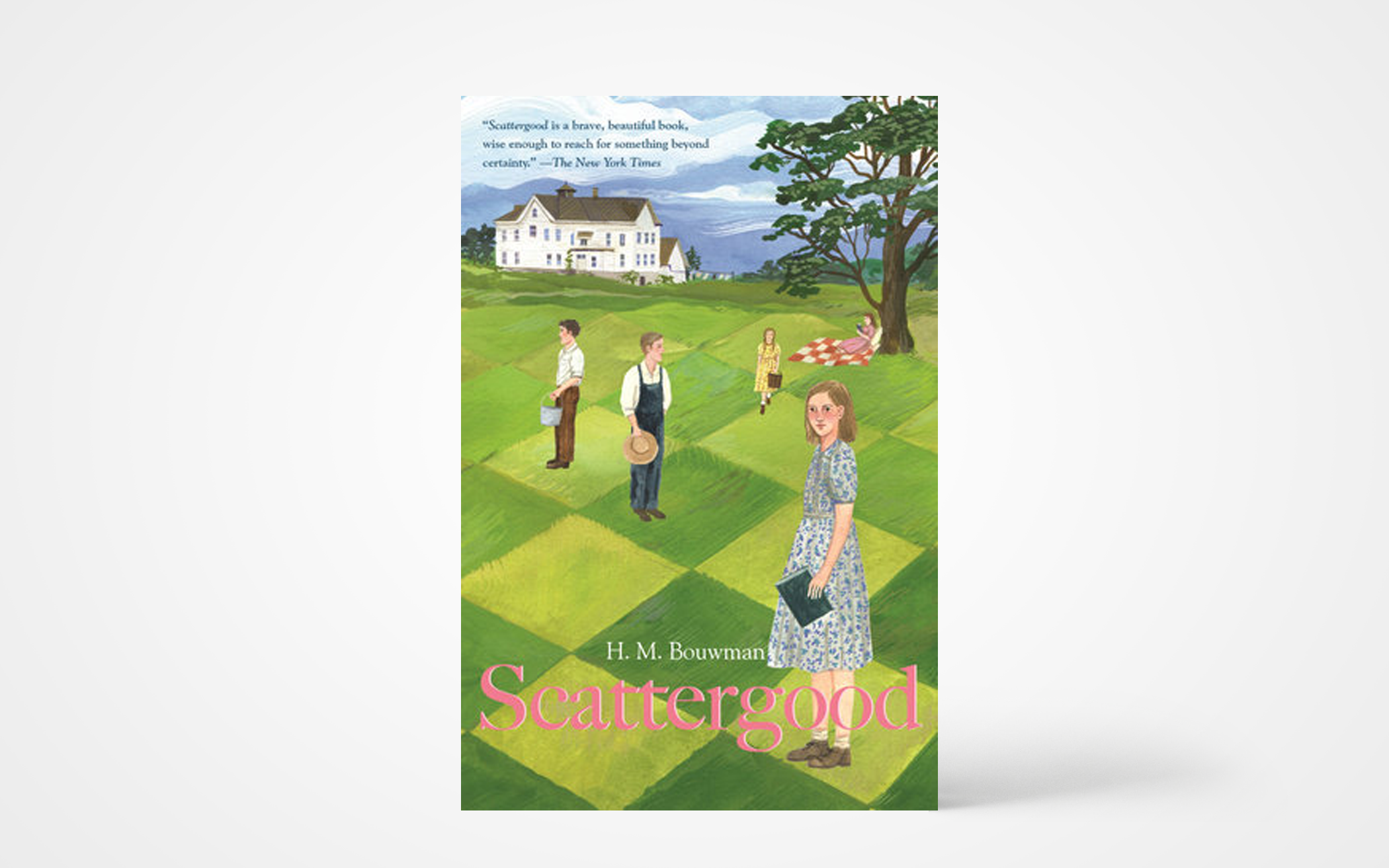
In 1941, Peggy and her cousin Delia, farm girls in Iowa, often misunderstood each other because of their differing interests. Peggy, a math whiz, thinks every problem life throws at a person can be solved like a math equation. Delia is passionate about poetry and literature. She views the world metaphorically and believes that life “can’t be quantified.” Though not kindred spirits, the cousins are friends who share the hope that something exciting will occur in their small corner of the world.
When Delia is diagnosed with leukemia, her parents keep the dire truth from her. Peggy learns about Delia’s condition and is faced with a dilemma like never before. She thinks, “Here, in short, was the problem: Delia was fourteen and I was almost thirteen, and we wanted something interesting to happen to us, and nothing interesting ever happened—except now, Delia taking sick. And that wasn’t a fair kind of interesting.”
As Peggy grapples with the fact that the doctor has said Delia might have only six months to live, she sets about trying to fix what seems to be an unsolvable problem. At the same time, she meets 16-year-old Gunther and a professor who are residing in Scattergood, a nearby Quaker hostel that has been reopened to host Jewish refugees from Europe. Peggy eventually learns the tragic stories about Gunther and the professor’s missing family members, who are presumed dead.
Soon, Peggy becomes aware of a change in her perspective: “It felt like something big was in motion, a war about to start. All the seeds were planted, all the equations were written on the blackboard. The numbers were all there, waiting to be added to or subtracted from each other; and the unknown number was there, too, in plain sight, a great big X, and I didn’t know how to solve for it.”
Still, Peggy tries to fix things, going to great lengths to find a cure for Delia, to be a friend to the troubled professor, and to navigate confusing romantic ups and downs. All the while, she has the nagging feeling "that this wasn’t the life I should be having. … That it should be better than it was.”
Richly metaphorical and movingly emotional, this coming-of-age novel grapples with questions about family and community relationships, atrocities committed in times of war, God, prayer, and life after death. Though recommended for children 10-12, Scattergood is better suited for ages 13 and older. Includes some instances of profanity. (Neal Porter Books)
About the Author
Sonya VanderVeen Feddema is a freelance writer and a member of Covenant CRC in St. Catharines, Ontario.